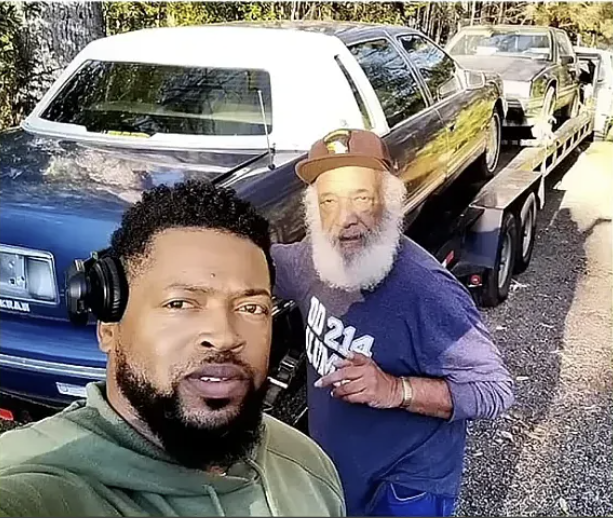
Eliot’s dad taught him two things: how to fix a car and how to make the best BBQ in town. Two skills. Both practical. Both requiring patience and attention to detail. Both gifts from a father who understood that the best inheritance isn’t money—it’s knowledge and the character to use it well.
After his father passed, Eliot chose a different way to honor him. Not a memorial fund or a plaque or annual remembrance events. Something active. Something that would keep his father’s hands working through his own. Something that would help people the way his father had always helped people.
He trades his famous ribs for broken cars, repairs them late at night after closing his restaurant, and gives them—free—to families who need a way to get to work, school, or the doctor. Think about that business model. He runs a restaurant known for its BBQ. People offer him broken cars in trade for his famous ribs. He accepts. Then, after a full day of running the restaurant, after closing time when most people are heading home exhausted, Eliot goes to work on those broken cars.
Single moms. Veterans. Struggling grandparents. The people who need cars most desperately are often the ones who can least afford them. Who can’t afford the repairs. Who are one broken-down vehicle away from losing jobs because they can’t get there. Who can’t take kids to school or themselves to medical appointments. Who are trapped by lack of transportation in ways that compound every other difficulty they face.
More than thirty cars, no money, no spotlight. Just kindness in motion. Thirty families who now have transportation because Eliot trades BBQ ribs for broken vehicles and fixes them in the hours when he should be resting. Thirty sets of keys handed over. Thirty moments of transformation from stranded to mobile.
Last week, a grandmother cried as he handed her keys. “Now I can see my grandkids.” The practical thing—a repaired car—enabling the human thing she needed most. Connection. The ability to be present in her grandchildren’s lives. To show up at school events and birthday parties and ordinary afternoons. The car wasn’t just transportation. It was access to relationship. To family. To the role she wanted to fill but couldn’t without a way to get there.
Eliot smiled. “Dad’s still helping through my hands.” That’s the truth that makes this story transcendent. His father is dead. But his father’s legacy—the skills he taught, the values he modeled, the belief that people with abilities should help people with needs—is alive. Working. Changing lives through his son’s hands.
One toolbox. Countless lives changed. Not fancy equipment. Not a state-of-the-art garage. Just one toolbox—the tools his father probably taught him to use—and the willingness to sacrifice sleep, rest, and personal time to repair vehicles for strangers who need them.
Eliot’s dad taught him how to fix cars. That skill could have just made Eliot money. Could have become a side business charging market rates for repairs. Could have been purely transactional. But instead, Eliot uses it the way his father would have wanted—to help people who are struggling. To give them mobility when they can’t afford it. To remember that skills are gifts meant to be shared.
And he taught him how to make the best BBQ in town. That skill built Eliot a business. Built him a reputation. Made his ribs famous enough that people will trade broken cars for them. And Eliot uses that too—not just to make money, but to create a barter system where his culinary skills become the currency that allows him to help people through his mechanical skills.
He trades his famous ribs for broken cars. Someone shows up at the restaurant with a vehicle that doesn’t run. They negotiate: ribs for the car. Eliot accepts. Gets the broken vehicle towed to wherever he works on them. And after closing the restaurant, after cleaning up and closing out the register and doing all the end-of-day tasks that restaurant owners do, he goes to work.
Repairs them late at night after closing his restaurant. When he’s already tired. When he’s already given a full day to his business. When most people would go home and rest. Eliot goes to work on someone else’s car. Diagnosing problems. Ordering parts. Doing the labor. Taking as long as it takes to make the vehicle reliable enough to give away.
And gives them—free—to families who need a way to get to work, school, or the doctor. The repairs are free. The car is free. The only cost was the broken vehicle someone traded for BBQ, and Eliot absorbs all the repair costs himself. Parts, labor, time—all free. Because the people receiving these cars can’t afford to pay. That’s why they need them.
Single moms who need to get to work to keep jobs that barely pay enough. Veterans who’ve served their country and come home to struggle with transportation. Struggling grandparents on fixed incomes who need to get to medical appointments or help with grandchildren. The vulnerable. The struggling. The people our society often overlooks.
More than thirty cars. In how long? The story doesn’t say. But thirty repaired vehicles is substantial. Thirty families transformed from stranded to mobile. Thirty sets of keys handed over. Thirty times Eliot chose to sacrifice his evening, his rest, his personal time to fix a stranger’s car for free.
No money, no spotlight. Just kindness in motion. He’s not doing this for recognition. Isn’t posting about it on social media for credit. Isn’t building a brand around his generosity. Just quietly, night after night, fixing cars for people who need them. Kindness in motion. His father’s values alive through his actions.
Last week, a grandmother cried as he handed her keys. How many times has that happened? How many people have received keys from Eliot and cried with relief, with gratitude, with the overwhelming recognition that someone saw their need and met it without expecting anything in return?
“Now I can see my grandkids.” That’s what the car meant. Not status or luxury. Not even just transportation. But connection. Relationship. The ability to be present in the lives of people she loved. The grandmother could see her grandkids because Eliot fixed a car his father taught him how to fix using skills passed down father to son.
Eliot smiled. “Dad’s still helping through my hands.” The perfect response. The perfect understanding. His father isn’t gone. His father is still helping through the skills he taught, through the values he modeled, through the son who learned both how to fix cars and how to use that skill to help people.
One toolbox. Countless lives changed. His father’s toolbox, probably. The same tools. The same skills. But used by the son to continue the father’s legacy. To keep helping. To keep changing lives. To prove that death doesn’t end what matters most—the values we pass down, the skills we teach, the example we set.
Eliot’s dad taught him two things: how to fix a car and how to make the best BBQ in town. And Eliot uses both to honor his father by helping others. Trading ribs for broken cars. Fixing them late at night. Giving them to people who need transportation. Thirty cars so far. Countless lives changed. Dad’s still helping through my hands.