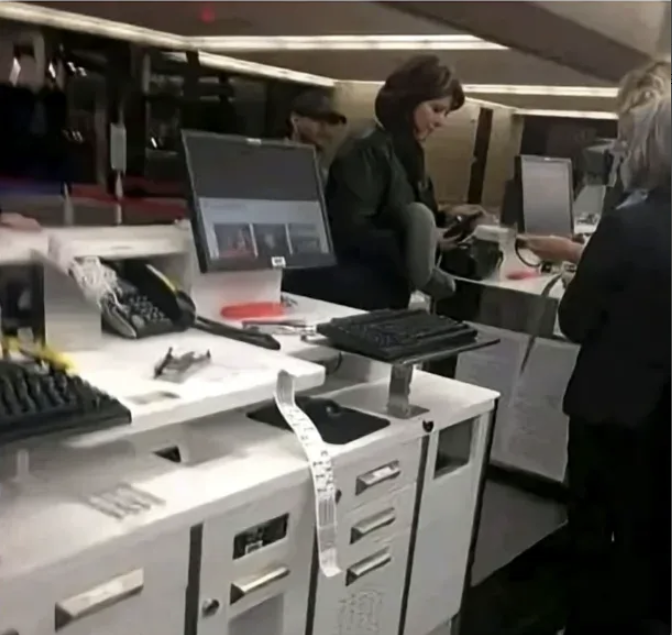
The man stood at the airport counter, his two-year-old daughter on his hip, trying to hold himself together. When he’d booked the flight months ago, she was one. Airlines don’t charge for children under two—they can sit on a parent’s lap. But between booking and traveling, she’d turned two. Now she needed her own ticket.
Seven hundred forty-nine dollars.
He didn’t have it. Couldn’t afford to change the flights either—the fees alone would devastate a budget already stretched too thin. He stepped aside from the counter, hugging his daughter close, heartbroken. His hands shook as he tried to make calls, searching desperately for solutions that didn’t exist. Family who might lend money. Credit cards already maxed out. Options that had run out before he even reached the airport.
His daughter didn’t understand why they weren’t getting on the plane. She sensed his distress though, the way children do, and grew quieter in his arms. He held her tighter, trying to shield her from his panic while his mind raced through impossible scenarios.
A woman at the counter had overheard everything.
She’d been standing nearby, probably dealing with her own travel arrangements, when she heard the gate agent explain the situation. Heard the price. Heard the man’s voice crack as he stepped aside. She could have looked away, pretended she hadn’t heard, focused on her own journey. Most people would have.
Instead, she walked over.
She didn’t ask many questions. Didn’t need his life story or an explanation of his financial situation. She’d heard enough to understand: a father trying to travel with his daughter, caught by a rule that made perfect sense on paper but created impossible situations in real life. A two-year-old who’d had a birthday at the wrong time. A price tag that might as well have been a million dollars for someone who couldn’t pay it.
She talked with him briefly—just enough to confirm what she’d already understood. Then she approached the agent with simple, direct words: “I want to buy her ticket.”
The agent explained the cost. Seven hundred forty-nine dollars. Not a small amount. Not pocket change. The kind of money that represents car payments or mortgage contributions or savings that took months to accumulate.
The woman simply said, “That’s fine,” and handed over her credit card.
The man stood frozen, trying to process what was happening. Trying to understand why a complete stranger would spend that much money to help someone she’d never met. He asked how he could repay her—needed some way to make this right, to turn this overwhelming generosity into something manageable, something he could eventually reciprocate.
She kept saying the same thing: “Don’t worry about it.”
Not in the dismissive way people sometimes brush off thanks, but genuinely. She didn’t want repayment. Didn’t need his gratitude transformed into a debt. She’d heard a father in crisis, she had the resources to help, and she chose to use them. That was enough for her.
The transaction completed. The little girl got her ticket. The father and daughter boarded their flight—together, as planned, because a stranger at an airport counter decided that a child’s birthday shouldn’t separate her from her father’s travel plans.
We don’t know the woman’s name. Don’t know her story or what motivated her to spend seven hundred forty-nine dollars on strangers. Maybe she’d once been in a desperate situation and someone helped her. Maybe she’d traveled with small children and understood how quickly plans can crumble. Maybe she simply had resources and a heart that responded immediately to others’ pain.
What we do know is this: she saw suffering and ended it. Immediately. Without hesitation. Without needing recognition or repayment or even a compelling backstory. She heard “seven hundred forty-nine dollars” and said “that’s fine” as if that amount of money was worth exactly what it bought—a father and daughter staying together, a crisis averted, a desperate situation resolved.
The man will remember that woman for the rest of his life. Will tell his daughter, as she grows, about the day a stranger bought her plane ticket. Will teach her that the world holds both hardship and extraordinary kindness, that strangers sometimes show up with exactly what you need, that generosity doesn’t always come with strings attached.
And his daughter—too young now to understand—will grow up hearing this story. Will learn that her father once stood in an airport heartbroken because he couldn’t afford her ticket, and a woman she’ll never meet made sure they could travel together anyway. She’ll learn that kindness can be immediate and costly, that helping others sometimes means significant sacrifice, and that the best gifts are the ones given without expectation of return.
The woman returned to her own travels. Boarded her own flight. Continued with her life, probably not realizing how profoundly her gesture would matter. She’d spent seven hundred forty-nine dollars and received nothing tangible in return—no repayment plan, no public recognition, no guarantee that her kindness would be remembered beyond that day.
But that father remembers. And someday, his daughter will understand. They’ll carry that story with them—proof that in moments of deepest despair, when options run out and hope seems lost, sometimes a stranger steps forward and simply says, “That’s fine.”
Those two words—that’s fine—transformed everything. Changed a father’s worst day into a story of unexpected grace. Turned a daughter’s birthday from a problem into proof that the world still holds people who see suffering and respond with immediate, generous action.
Seven hundred forty-nine dollars. A woman at an airport counter. A father and daughter who made their flight because someone decided their crisis mattered more than the money.