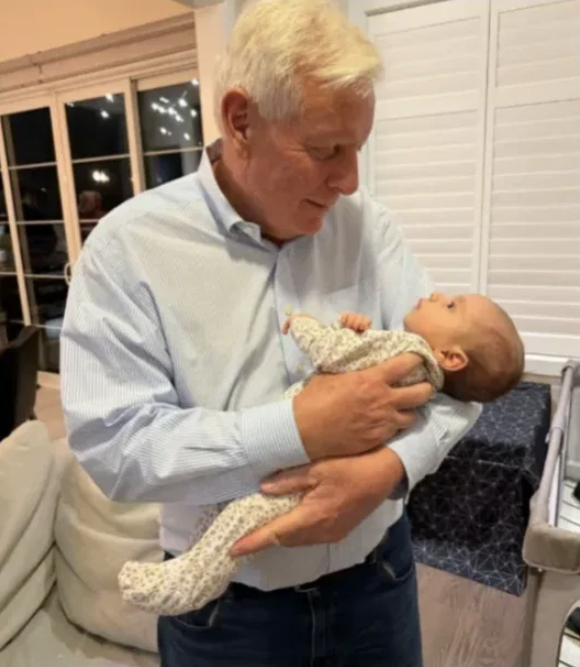
Frank volunteered at a downtown shelter after retiring from the police force. He’d spent decades in law enforcement seeing the worst of human behavior, but something about the shelter work felt different—less about enforcement, more about presence. Less about solving crimes, more about being there when people had nowhere else to go.
A young woman came in often. Deep in addiction, struggling with demons that had taken over her life, she was familiar to everyone at the shelter. The staff knew her name, knew her patterns, knew that addiction had its grip so tight that recovery seemed impossibly distant. They offered resources and support, but addiction doesn’t respond to good intentions alone.
Then one night, everything changed. She walked in sober—truly sober, not just between highs—and she was clutching a newborn baby.
Frank saw the desperation in her eyes before she even spoke. This wasn’t the glazed look of someone under the influence. This was the clear-eyed terror of someone who’d just become responsible for a tiny life and knew with devastating certainty that she couldn’t protect it. Not yet. Maybe not ever.
She approached Frank directly, bypassing the other volunteers, as if she’d already decided he was the one who could help. Her voice shook when she asked the question that must have been tearing her apart: Do you know someone who could keep my baby safe?
Most people would have referred her to child services. Would have followed protocol, made the appropriate calls, let the system handle it. But Frank thought of his quiet, empty house. The house where he lived alone since his wife passed. The house that had too many rooms and too much silence. The house that could hold a baby who desperately needed safety.
He didn’t hesitate. He told her about his house, his situation, his willingness to help. But he was honest too—this wasn’t something that could happen overnight. The legal process would take months. Fostering requires background checks and home studies, certifications and approvals. Becoming a guardian requires even more—court hearings and legal proceedings that move at bureaucratic speed while real life happens much faster.
The young mother understood. She knew she was asking for something enormous. She knew that giving up her baby—even temporarily, even to keep the child safe—was the hardest thing she’d ever do. But she also knew that loving her daughter meant making the impossible choice.
The legal process took months, just as Frank warned. But he never wavered. He showed up for every hearing, completed every requirement, navigated every bureaucratic obstacle with the patience of someone who’d spent a career dealing with systems that move too slowly for the people they’re meant to serve.
He was there for the final hearing—the one where a judge officially placed the baby in his care. The young mother was there too, sober, watching as the child she’d brought into the world was legally entrusted to a stranger who’d become her daughter’s best chance at a safe life.
Frank now raises the little girl. She’s no longer a newborn but a growing child with a bedroom in that quiet house, with a grandfather figure who feeds her and reads to her and makes sure she knows she’s loved. And every year on her birthday, Frank tells her the same story.
He tells her about her first mother. About a woman who loved her so much that she made the hardest choice any parent can make. About a mother who was deep in addiction but had one moment of clarity—one night of sobriety—and used it to make sure her baby would be safe. About love that looked like letting go.
He doesn’t sugarcoat addiction or pretend the situation was anything other than tragic. But he also doesn’t let the little girl grow up thinking she was abandoned because she wasn’t wanted. He makes sure she knows the truth: her first mother loved her enough to let her go. Loved her enough to find someone who could provide what she couldn’t. Loved her enough to choose her daughter’s safety over her own desire to keep her close.
That’s a kind of love most people can’t comprehend until they’re faced with it. The love that releases rather than clutches. The love that recognizes its own limitations and finds someone else to provide what it can’t. The love that survives in the space between presence and absence, in the choice to give a child the best possible chance even when it means not being the one who raises them.
The young mother is still fighting her battles. Addiction doesn’t end cleanly or quickly, and Frank doesn’t know if she’s sober now or still struggling. But he knows that on one desperate night, she made a choice that saved her daughter’s life. She walked into a shelter clutching a newborn and found someone willing to open not just his home but his heart.
And the little girl is growing up safe. Loved. Protected by a retired police sergeant who saw a baby in need and a mother in crisis and responded with the kind of immediate compassion that changes lives. She’ll grow up knowing her story—both the hard parts and the beautiful parts. She’ll know she was wanted, even if she couldn’t be kept. She’ll know her first mother’s love was real, even though it looked like goodbye.
Frank could have said no. Could have let the system handle it, could have avoided the months of legal proceedings and the lifelong commitment of raising a child alone in his retirement. But he didn’t. He saw a baby who needed safety and a mother who needed help making an impossible choice, and he became the bridge between crisis and hope.
Every year on her birthday, he tells her how much her first mother loved her. Enough to let her go. Enough to find her someone who could keep her safe. Enough to make the choice that addiction makes nearly impossible—putting her child’s needs above her own desperate circumstances.
That’s the story the little girl will carry with her. Not abandonment, but sacrifice. Not rejection, but love in its most painful form. Not a mother who didn’t care, but a mother who cared so much she gave her daughter to someone who could provide what she couldn’t.
And Frank, the retired police sergeant with a quiet, empty house, became the person who could. He opened his home and his heart, navigated the legal system, showed up for every hearing, and gave a baby the safety her mother desperately wanted for her.
Some families are built through biology. Some are built through choice. And some are built in shelter lobbies when a desperate mother meets a compassionate stranger and together they create safety for a child who needed both of them—one to love her enough to let go, and one to love her enough to hold on.