Any parent with multiple children knows the particular chaos of restaurant outings. The juggling act of orders and spills and keeping everyone reasonably contained. The mom at Fernando’s that evening was managing six kids—six different needs, six different moods, six sets of eyes looking to her for everything.
And then Brekken started crying.
Not the quiet, easily-soothed crying of mild disappointment. The full-body, heartbroken crying of a child whose need feels enormous and immediate. He wanted to sit with a stranger at another table. Not his siblings. Not his exhausted mother trying to keep everything together. A stranger.
To an adult, it sounds absurd. But to a little boy in that moment, it was everything. And his tears said so, loud enough for the whole restaurant to hear.
His mother felt the familiar weight of it—the other diners glancing over, the calculations running through her mind. Do we leave? Do I take him to the car? How do I fix this without disrupting everyone’s evening? She was already moving, already preparing to scoop him up and end this somehow, when something unexpected happened.
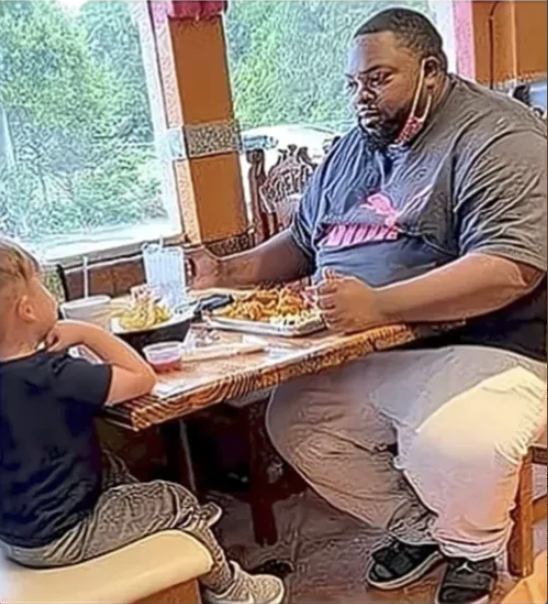
A man at another table stood up. He walked over with the kind of easy confidence that comes from genuine kindness, not performance. He spoke to the mother first—not taking over, not assuming, but offering. And when she nodded, overwhelmed and grateful, he invited Brekken to join him.
Just like that, the crying stopped.
Brekken walked to that table and sat down like he’d been invited to the most important meeting of his life. The man slid the basket of chips and salsa closer. They began to chat—about what, nobody outside their bubble could hear. But whatever it was, it worked. Brekken’s face transformed from tear-stained devastation to pure contentment. He dipped chips in salsa with the focus of someone solving great problems. He talked with his hands the way children do when they’ve found someone who actually listens.
The mother watched from her table, her other five children now eating peacefully, and felt something crack open in her chest. Not the breaking kind of crack, but the kind that lets light in. Here was a stranger giving her son exactly what he needed—not because he had to, not because it was expected, but because he saw a small human hurting and decided to help.
When their meals were finished and it was time to leave, Brekken waved goodbye to his new friend like they’d known each other forever. The kind of wave children give when they’re not performing or being polite, but when they genuinely feel connection. The man waved back with equal sincerity.
As the family walked to their car, the mother realized something had shifted. The evening that had been teetering on the edge of disaster had been rescued—not by her managing better or her children behaving perfectly, but by one person’s willingness to see beyond himself. To let a crying child interrupt his dinner without resentment. To give his time and attention to someone else’s kid without expecting anything in return.
Later, she would think about how easy it would have been for that man to look away. To decide it wasn’t his problem, that the mother should handle her own children, that his peaceful dinner mattered more than a stranger’s crisis. And she’d realize that’s what makes kindness remarkable—not that it’s difficult, but that it’s optional, and he chose it anyway.
Brekken probably won’t remember that man’s name in a few years. He might not even remember his face. But he’ll remember the feeling of being seen, of being worth someone’s time, of having his strange small need met with grace instead of irritation. Those memories sink in deeper than names and faces. They become the foundation of how we understand whether the world is a good place or not.
The mother posted about it later, not because it was extraordinary in scope, but because it was extraordinary in spirit. In a world that often feels divided and disconnected, here was proof that we’re still capable of showing up for each other in the smallest, most immediate ways. That kindness doesn’t require grand gestures or viral moments. Sometimes it just requires pulling out a chair and sharing your chips with a crying kid.
The man went back to his dinner. The family went home. Life continued its normal rhythm. But everyone who witnessed it walked away carrying something new—a reminder that we’re not powerless to change the energy in a room, to rescue a moment from falling apart, to make someone’s impossible evening a little more possible.
Sometimes all it takes is someone willing to say yes when a child asks for something strange. Someone willing to trade their quiet dinner for a chance to remind a little boy that people can be good. Someone willing to prove that kindness doesn’t just exist in stories we read—it exists at the next table over, waiting to be offered.