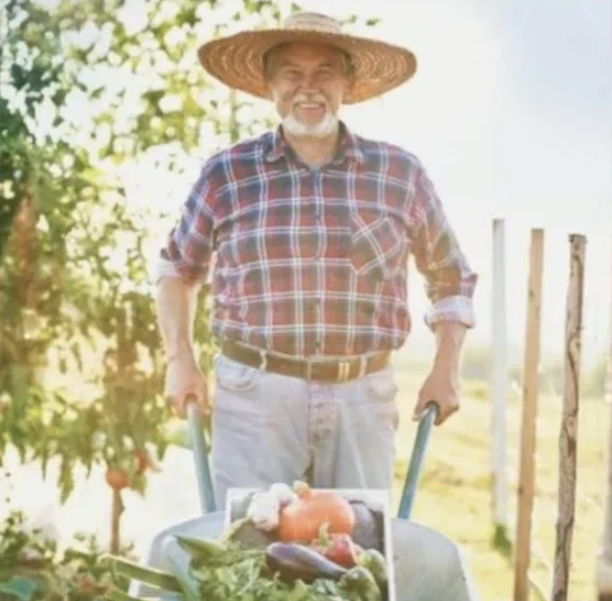
Every August, 76-year-old Frank’s garden overflows. He’s been tending this plot for decades—long enough to understand exactly how much zucchini, tomatoes, and cucumbers one household needs, and long enough to know that his garden produces far more than that.
He could let the excess rot. Could compost it or give up growing so much. But Frank understands something fundamental about abundance: it’s meant to be shared.
So each evening, as the summer sun softens into dusk, he gathers the surplus produce into a wheelbarrow. He pushes it slowly down his quiet suburban street—an old man with vegetables, moving at a pace that honors his age and the ritual he’s created. He leaves small bundles on doorsteps and porches, distributed with the care of someone performing a sacred task.
He rarely knocks. Doesn’t wait for thanks or conversation. Just leaves the fresh produce and moves on to the next house. Neighbors wake to find tomatoes still warm from the sun, zucchini with their blossoms barely wilted, cucumbers picked at perfect ripeness. No note. No expectation. Just food, freely given.
One new family—touched by the gesture—left a thank-you note in his mailbox with a child’s drawing of a smiling tomato. Frank took that drawing to his tool shed and taped it inside where he’d see it every time he gathered his gardening supplies. Not displayed for others to see, but kept privately as a reminder of why he does this.
The ritual requires no words. No transaction. No social obligation. Just the quiet offering of earth’s excess to those around him. Frank has learned what takes some people a lifetime to understand: that having more than you need is an invitation to give, not an invitation to hoard. That abundance creates responsibility. That a garden’s overflow can become a neighborhood’s blessing if someone’s willing to push a wheelbarrow down a street at dusk.
He’s not feeding his entire neighborhood. Not solving food insecurity or eliminating anyone’s grocery bills. But he’s doing something perhaps more important: he’s creating connection through generosity. He’s reminding people that neighbors can be sources of unexpected kindness. He’s demonstrating that sharing doesn’t require grand gestures or organized programs—sometimes it just requires noticing you have more than you need and quietly giving it away.
The neighbors have learned to expect it. August means Frank’s wheelbarrow. Means checking porches in the evening. Means fresh vegetables that taste better because they come from a neighbor’s hands and heart. They’ve tried to repay him—offers of help with his garden, invitations to dinner, attempts to turn his generosity into something that allows reciprocity.
But Frank doesn’t want reciprocity. He wants exactly what he’s created: a simple ritual where excess becomes offering, where gardening becomes ministry, where one old man with a wheelbarrow makes his neighborhood a little more connected, a little more kind, a little more reminded that we’re all in this together.
His garden will keep producing. As long as his body allows, he’ll keep harvesting. And as long as he’s able, he’ll keep pushing that wheelbarrow down his quiet suburban street, leaving bundles of vegetables like breadcrumbs of kindness, asking nothing in return except the quiet satisfaction of knowing that earth’s abundance is being shared rather than wasted.
Seventy-six years old, moving slowly but steadily, Frank has found his purpose in the overflow of his garden and the evening ritual of sharing it. No speeches. No recognition. No expectation of gratitude. Just an old man, a wheelbarrow, and the understanding that having more than enough is an invitation to make sure others have enough too.