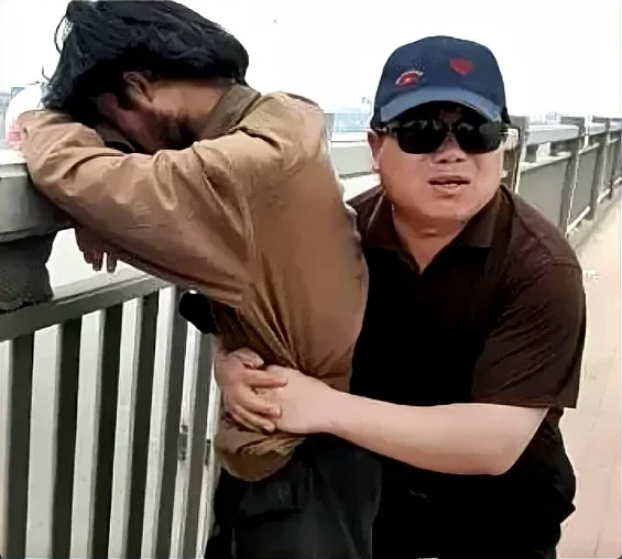
Year 2000. Chen Si saw a young woman at the bridge edge.
He didn’t look away. That’s the first crucial choice. Most people would have averted their eyes, told themselves it wasn’t their business, walked past while hoping someone else would intervene.
He walked over, started talking. She stepped back. That day changed everything.
For Chen Si, witnessing that moment transformed his understanding of responsibility. He realized that people in crisis need someone to notice, someone to care, someone willing to interrupt their own day to prevent someone else’s final moment.
For 24 years, Chen has patrolled Nanjing Yangtze River Bridge every weekend, watching for lost souls.
Not occasionally when convenient, not when weather permits, but every weekend for nearly a quarter century. Rain, cold, heat, holidays — Chen is there, walking the bridge, paying attention while others rush past focused on their own destinations.
No training. Just empathy.
He’s not a licensed therapist or crisis counselor. He hasn’t completed certification programs or studied psychology formally. He simply understands pain because he grew up poor himself, knows what desperation feels like, recognizes the signs of someone who’s reached the end of their capacity to endure.
He spots the signs – aimless walking, eyes fixed on water.
These details reveal his expertise gained through observation rather than textbooks. He’s learned to read body language, to distinguish tourists from people in crisis, to identify the specific kind of aimlessness that precedes jumping.
He listens. Offers food, money, hope.
His intervention isn’t complicated or therapeutic in the clinical sense. He provides immediate practical help — food for hungry people, money for those facing financial desperation, hope through simple human connection that says: someone sees you, someone cares, you’re not as alone as you think.
Grew up poor himself. Understands their pain.
This matters because it means he’s not saving people from a position of privilege or superiority. He knows what poverty feels like, understands the cascading problems that lead people to bridges, can speak with authenticity rather than platitudes.
By 2024, Chen saved 469 lives.
469 people who approached that bridge intending to die but left it alive because one man refused to look away. 469 families who didn’t lose someone. 469 futures that continue existing because Chen walked over and started talking.
“I can’t save everyone,” he admits.
This acknowledgment is heartbreaking and honest. Not everyone steps back. Not everyone responds to food or money or hope. Some people jump despite his best efforts, and Chen carries those losses even as he returns the next weekend to try again.
“But giving one person another chance makes it worth it.”
This philosophy sustains him through 24 years of weekend patrols, through the people he couldn’t save, through the emotional weight of constantly encountering human suffering.
One man. 469 second chances.
The photograph shows Chen on the bridge, holding someone who’s clearly in distress, offering physical comfort and human connection. The person is covering their face, perhaps crying, perhaps ashamed, but allowing themselves to be held by this stranger who cares enough to patrol a bridge every weekend.
Chen Si represents something rare: sustained commitment to preventing suffering without institutional support or recognition or compensation. He’s not employed as a crisis counselor. This isn’t his job in any official sense. It’s simply what he does every weekend because that day in 2000 showed him that one person paying attention can mean the difference between life and death.
The Nanjing Yangtze River Bridge has a tragic reputation as a suicide location. Its height and accessibility make it attractive to people in crisis. Chen can’t change the bridge’s design or eliminate the desperation that brings people there. He can only show up consistently and pay attention.
469 lives by 2024 means roughly 19-20 people saved per year, or nearly two people per month for 24 years. That’s remarkable consistency — not just a few dramatic rescues followed by losing interest, but sustained presence that has saved nearly 500 people across more than two decades.
Each of those 469 people has a story. Financial collapse, relationship loss, mental illness, chronic pain, whatever circumstances brought them to that bridge edge believing death was their only option. Chen didn’t solve their problems or eliminate their pain. He simply gave them another chance, provided immediate relief, connected them with resources, reminded them that someone cared whether they lived or died.
Some of those 469 people probably returned to thriving lives. Some may still struggle but are alive to continue trying. Some might have returned to the bridge on a weekend when Chen wasn’t there, or jumped from somewhere else later. He can’t know what happened to most of them after they walked away from the bridge that day.
But 469 people left that bridge alive because he was there. That’s not nothing. That’s 469 moments when someone’s pain was witnessed, when human connection interrupted isolation, when stepping back became possible because a stranger offered food or money or simply conversation that reminded them they weren’t invisible.
“But giving one person another chance makes it worth it.” This philosophy means that even if Chen could only save one person across 24 years, he would consider the commitment worthwhile. That one life, one second chance, one family that didn’t lose someone — that would justify every weekend spent patrolling, every person he couldn’t save, every emotional toll of constantly encountering crisis.
The fact that he’s saved 469 means his impact is almost incomprehensibly large. Nearly 500 families who didn’t experience suicide loss. Nearly 500 people who got another chance at life, who might find treatment or relief or simply survive long enough for circumstances to change.
One man. No training. Just empathy. 469 second chances.