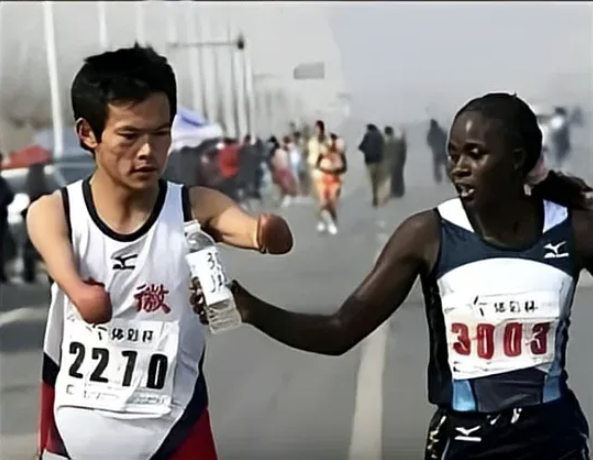
During the 2010 Zheng-Kai Marathon in China, Kenyan runner Jacqueline Nyetipei Kiplimo was leading the women’s race. Not just competing—leading. On pace to win. Experiencing that runner’s high when everything feels perfect, when your body is performing exactly as trained, when first place is within reach.
Then she noticed a disabled athlete struggling at one of the water stations. Not just tired—struggling in a way that suggested he might not finish. Might not make it through the remaining distance. Might have to drop out despite having already covered significant ground.
Jacqueline had a choice in that moment. She could keep running. Could maintain her lead. Could win the race she’d trained for, claim first place, celebrate her victory. That would be the expected choice. The competitive choice. The choice that prioritizes personal achievement over everything else.
Or she could slow down and help.
Jacqueline slowed down. From 10 kilometers to 38 kilometers—28 kilometers of helping instead of competing. Twenty-eight kilometers of choosing someone else’s finish over her own victory. Twenty-eight kilometers of demonstrating that sportsmanship means something bigger than winning.
She helped him at water stations. Offered encouragement. Stayed with him through the kilometers when his disability made continuing difficult. Made sure he had what he needed to keep going. Sacrificed her lead, her first place finish, her personal victory so that a disabled athlete could complete the marathon.
The photo captures them running together—Jacqueline in her racing singlet, the disabled athlete beside her, both of them moving forward. Not at winning pace. At finishing pace. At the pace that allows both of them to complete the race, even though only one of them will cross the finish line first.
Jacqueline’s selfless act turned a marathon into a moving lesson in compassion, sportsmanship, and humanity. Not through speeches or grand gestures, but through the simple choice to value someone else’s achievement as much as her own.
Because here’s what Jacqueline understood: winning the 2010 Zheng-Kai Marathon would have been an accomplishment. Would have earned her prize money, recognition, a line on her athletic resume. Would have been something she could be proud of.
But helping a disabled athlete finish the race when he was struggling? That became something more significant than any first-place finish could be. That became a story that transcends sports. That became evidence of character that matters more than speed.
Marathon culture can be intensely competitive. Elite runners train for years to shave minutes off their times. Prize money and sponsorships depend on placing well. Every second counts. The difference between first and second place can be enormous—financially and professionally.
Jacqueline gave that up. Not because she couldn’t maintain her lead. Not because she was injured or struggling herself. But because she saw someone who needed help and decided that his need was more important than her winning.
That’s not just sportsmanship. That’s humanity. That’s the recognition that we’re all in this together—that another person’s struggle matters more than your personal victory, that helping someone finish is more important than finishing first yourself.
The disabled athlete she helped probably remembers that marathon as one of the most difficult things he’s ever done. Probably struggled through kilometers where quitting seemed easier than continuing. Probably reached points where finishing felt impossible.
And then a Kenyan runner who was leading the race slowed down to help him. Stayed with him for 28 kilometers. Made sure he had water and encouragement and company. Made finishing possible when it felt impossible.
That gift—the gift of Jacqueline’s presence and help—probably meant more to him than first place could have meant to her. Because he finished. Completed a marathon despite his disability, despite struggling, despite reaching points where continuation seemed impossible.
He finished because Jacqueline chose to help him. Because she valued his completion more than her victory.
Jacqueline’s act sparked conversations about what sportsmanship really means. About whether winning is always the most important goal. About what we value in athletes—pure speed and competitive dominance, or character and compassion and willingness to sacrifice personal achievement for something more meaningful.
Most sports celebrate individual achievement. Fastest time wins. First place gets the prize. Competition drives improvement. That’s all true and valuable. Sports need competitive drive.
But Jacqueline demonstrated something else: that sportsmanship includes recognizing when helping someone else matters more than winning yourself. That true athletic excellence includes character, not just performance. That the most memorable moments sometimes aren’t the victories, but the choices we make about how we compete.
She didn’t win the 2010 Zheng-Kai Marathon. But she won something more valuable: respect from everyone who heard her story. Recognition that she understood something many elite athletes never grasp: that how you compete matters as much as whether you win.
The photo of them running together—Jacqueline and the disabled athlete, moving forward side by side—is more powerful than any photo of her crossing the finish line first would have been. Because it captures the moment when an elite athlete chose compassion over competition. When someone leading a race decided that helping someone else finish mattered more than finishing first herself.
Twenty-eight kilometers. From 10 km to 38 km. That’s not a brief pause to help someone at a water station. That’s the majority of a marathon spent prioritizing someone else’s race over your own.
That’s sacrifice. That’s compassion. That’s sportsmanship at its absolute finest.
Jacqueline Nyetipei Kiplimo didn’t win first place at the 2010 Zheng-Kai Marathon. But she won something infinitely more important: she demonstrated that humanity matters more than victory, that compassion is more valuable than competition, that helping someone finish is a greater achievement than finishing first.
That’s a lesson that transcends sports. That’s a moving reminder of what we’re capable of when we choose each other over personal achievement.
The disabled athlete finished the marathon. Because a Kenyan runner who was leading the race decided his finish mattered more than her victory.
That’s not just sportsmanship. That’s beautiful.