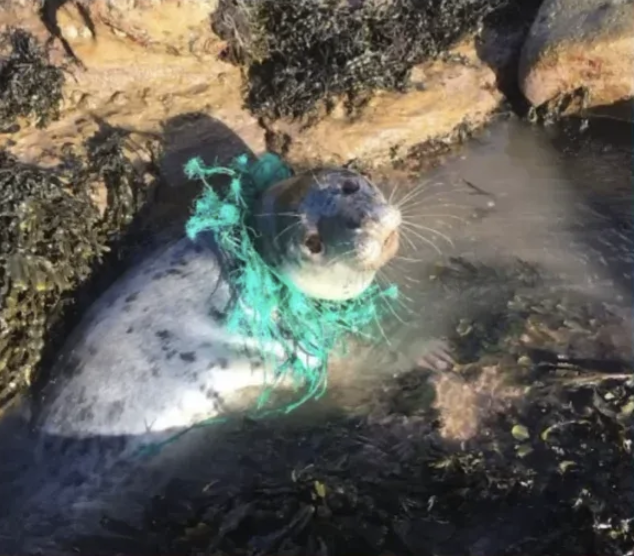
Early morning along the Oregon coast carries a particular kind of quiet—the sound of waves against rocks, seabirds calling overhead, the distant hum of boat engines preparing for another day’s work. Commercial fisherman Luke Merritt was heading out when he spotted something struggling near the breakwater. A young harbor seal, thrashing in panic, blue rope wrapped tight around its neck and flipper.
The rope was cutting in, preventing movement, slowly choking the life out of an animal caught in human debris. Luke could have kept going. He had nets stacked, tide already turning, a day’s income waiting in waters that wouldn’t stay generous for long. But he cut his engine instead.
He climbed onto the rocks, bait knife in hand, moving carefully toward a terrified wild animal that didn’t understand he was there to help. Harbor seals have teeth meant for tearing fish. Getting close meant risking injury. But Luke understood something essential: that some moments demand we put compassion before convenience, even when it costs us time and safety.
He kept his distance while working—reaching, cutting, careful not to spook the seal into hurting itself further. The rope was thick, tangled, stubborn. But finally, it gave way. The seal lunged forward and slipped into the surf, diving beneath the surface. Luke stayed on the rocks, waiting. Minutes passed. Then the seal resurfaced, breathing steady, swimming free.
Before heading back out to work—nets still stacked, tide still turning—Luke logged the rescue with wildlife officials. Not for recognition, but because that’s what responsible people do. They document, they report, they help officials understand the scope of problems that need addressing. Then he went back to his boat and his nets and his day’s work, probably hours behind schedule but carrying something more valuable than an early catch: the knowledge that he’d chosen right.
The photograph shows the seal moments after freedom, the blue rope still visible around its neck and body, evidence of the entanglement that nearly killed it. But what the image really captures is the intersection of human activity and wildlife survival—how our debris becomes their death traps, and how our compassion can become their lifeline.
Luke didn’t post about it on social media. He didn’t call news stations. He just saw a living thing suffering and stopped his day to help. That’s the kind of heroism that happens away from cameras and praise—fishermen climbing rocks with bait knives, choosing to be late, choosing to risk safety, choosing to believe that a seal’s life matters enough to put everything else on hold.
Somewhere off the Oregon coast, that seal is swimming now. Hunting fish, diving deep, living the life it almost lost to blue rope and human carelessness. It doesn’t know Luke’s name or understand the sacrifice he made. But it’s alive because one person saw suffering and decided that making money could wait, that inconvenience was temporary, but death is permanent, and that sometimes being human means stopping everything to help another creature breathe free.