People assume homelessness is a choice, a moral failing, a series of bad decisions that leads to sleeping on sidewalks. They see someone on the street and think: addiction, laziness, unwillingness to work. They don’t see the systemic barriers, the impossible choices, the way one crisis cascades into another until there’s nowhere left to go.
He’s not homeless by choice. He tried six shelters. Six different places that exist supposedly to help people who have nowhere else to go. And all six said no.
Not because he was dangerous or disruptive or unwilling to follow rules. Because of Rafi.
Rafi is a dog—brown and medium-sized, with the kind of face that’s seen hardship and responded with loyalty anyway. The man found him years ago, injured and alone, and took him in when he still had a home and resources to share. Rafi became his only family, the one constant relationship in a life that was slowly falling apart.
Then the job disappeared. In an economy where one missed paycheck can mean disaster, he found himself unable to make rent. The landlord wasn’t sympathetic. The eviction was swift. And suddenly, he and Rafi were on the street, looking for options that didn’t exist.
Shelter after shelter turned him away. Some because of rules—no pets allowed, exceptions only for service animals. Some because of space—they were full and dogs complicated already limited capacity. Some because of insurance—liability concerns about animals around other residents. The reasons varied, but the result was always the same: we can help you, but not your dog.
One shelter offered a compromise. He could have a bed if Rafi went to a kennel. They’d keep the dog somewhere safe while he got back on his feet. It seemed reasonable to them, probably—a practical solution to a logistical problem.
But Rafi wasn’t a logistical problem. Rafi was the one who’d stayed when everyone else left. The one who didn’t judge or abandon or decide things were too hard. Rafi was family, and you don’t leave family in a kennel so you can sleep in a bed.
So they stay together. Sharing one blanket on concrete sidewalks, finding whatever food they can, navigating a world that’s not designed for people without homes and definitely not designed for people without homes who refuse to abandon their dogs.
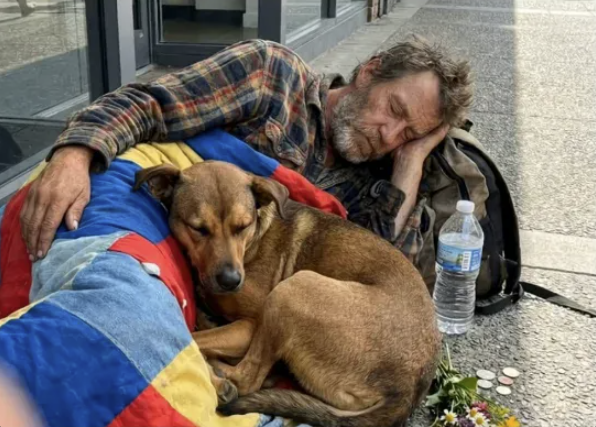
The photograph shows them pressed together against a building, the man’s body curled protectively around Rafi, who lies on a bright blue and yellow blanket—the kind that’s cheap but warm, functional but cheerful. A water bottle sits nearby. The man’s face is peaceful despite the circumstances, resting against his backpack while Rafi settles into the curve of his body with the trust of someone who knows they’re safe as long as they’re together.
People think he chose the streets. They see him and Rafi and make judgments about priorities, about what a reasonable person would do. They think: it’s just a dog, take the shelter bed, get back on your feet, then get the dog back.
But really, he chose the one being who never left him. He chose loyalty over comfort, relationship over convenience, keeping his family intact over accepting help that required abandoning the only one who’d stood by him.
There’s something profound in that choice, even if it’s heartbreaking. Six shelters exist to help people experiencing homelessness, but their rules create impossible situations. If you have a dog—not for protection or companionship in some abstract sense, but as your actual family, the only relationship you have left—you’re forced to choose between shelter and staying together.
Many people in his situation give up their dogs. It’s practical, after all. Dogs need food and veterinary care and space that’s impossible to provide when you’re homeless. Shelters and rescue organizations will take them, find them new homes with families who can offer stability and resources. It’s the sensible choice.
But sensible doesn’t account for what it feels like to surrender the one being who’s been with you through everything. To hand over your dog knowing you might never see them again, that they’ll go to a home where someone else gets their loyalty and trust. That the cost of a roof over your head is losing the only one who makes you feel less alone.
So he stays on the streets with Rafi. They share one blanket and whatever food they find. When it rains, they get wet together. When it’s cold, they press closer for warmth. When people walk past making judgments about choices, he knows something they don’t: that keeping his family together, even in impossible circumstances, matters more than comfort purchased with abandonment.
Rafi has been his only family since he found him injured years ago. That history matters. The care given when he still had resources to share matters. The choice to take in a hurt animal when his own life was barely stable matters. And the loyalty Rafi has shown through job loss and eviction and the descent into homelessness—that matters most of all.
People think he chose the streets. But really, he chose Rafi. He chose keeping his promise to an animal who’d already been abandoned once before he found him. He chose honoring the relationship that’s sustained him through his worst moments. He chose family, even when the cost was everything else.
Six shelters said no because of rules and space and insurance. One shelter offered a bed if he’d give up his dog. And he looked at Rafi—brown fur, loyal eyes, the one who stayed—and chose differently than they expected. Not because he wanted to be homeless, but because some things matter more than shelter when that shelter requires leaving behind everyone who matters to you.
They stay together. On concrete sidewalks with one bright blanket between them and the cold. Sharing whatever food they can find. Navigating a world that offers help with conditions attached, that makes you choose between needs that shouldn’t be in competition. Together because when everything else fell apart, they had each other. And that, he decided, was worth more than a bed in a place that demanded he arrive alone.
The streets are hard. Homelessness is dangerous and exhausting and dehumanizing. But for this man and Rafi, staying together—choosing loyalty over shelter, relationship over rules—is the choice that lets them both remain whole. Not safe, not comfortable, not what anyone would choose if given better options. But together. Always together. Because that’s what family means.