Twenty-three years ago, helping his mother downsize, he grew frustrated watching her examine an iron kettle for twenty minutes. It was just a kettle. Old, worn, nothing special. But she held it carefully, turning it over in her hands, lost in a memory he couldn’t see. He complained about the pace. She quietly explained.
Her mother had cooked Depression-era meals in that kettle—simple, humble food that fed neighbors who had even less. Those neighbors would return the kettle with handmade gifts, small tokens of gratitude that meant everything when no one had anything. The kettle wasn’t just cookware. It was a vessel of kindness, a reminder of a time when people survived by taking care of each other.
Suddenly, he understood. She wasn’t examining an iron kettle. She was reliving her life, one object at a time.
Fast forward to today. Now it’s his turn to sort through belongings—his own things, accumulated over decades. And as he picks up each item, he finally grasps what his mother felt. These things aren’t just things. They’re anchors to moments that shaped him. They’re comfort. They’re stories. They’re proof that he lived, that his days mattered, that the people he loved existed in ways that can still be touched.
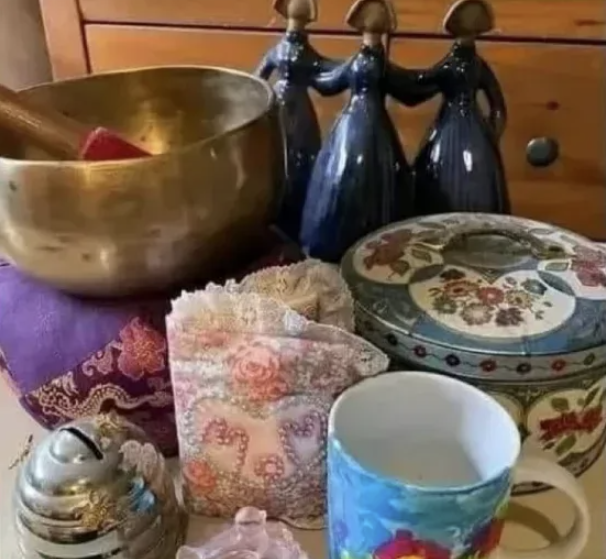
A vintage tea tin. A set of blue figurines. A worn brass bowl. Each one holds a memory, a person, a moment that deserves to be honored before it’s packed away or let go. And now he understands why his mother moved so slowly. Because saying goodbye to objects is saying goodbye to pieces of yourself.
Those things comfort us. They hold our stories when our memories start to fade. They’re the physical proof that our lives were full, that we were loved, that we mattered. And when we’re forced to let them go—through downsizing, aging, loss—it’s not just clutter we’re releasing. It’s pieces of our identity.
He wishes he’d listened more patiently. He wishes he’d asked more questions. He wishes he’d let her take all the time she needed to say goodbye to that iron kettle and the life it represented.
Because now he knows. Now he feels it. And as he sorts through his own belongings, he moves slowly, honoring each object the way his mother taught him—even if he didn’t understand the lesson at the time.
The things we keep aren’t about materialism. They’re about memory. They’re about connection. They’re about holding onto the people we loved and the moments that made us who we are.
His mother knew that. And now, decades later, so does he. He just wishes he’d understood it sooner.