Someone asked an elderly woman what it’s like to grow old, knowing most of her life is behind her. It’s the kind of question younger people ask with curiosity and maybe a little fear—trying to understand what awaits them, how it feels to live in a body that’s aged while you still remember being young.
Her answer was both simple and profound: she said she’s been the same age her entire life.
Not physically, obviously. Her body has changed dramatically over decades—from child to teenager to young adult to middle-aged to elderly. Anyone with eyes can see that transformation recorded in photographs, visible in mirrors, felt in how she moves and what her body can or cannot do anymore.
But the voice inside her head never aged. She’s always been that same girl, her mother’s daughter, wondering when she’d grow up and become old. That internal sense of self—the “I” that observes and experiences and thinks—hasn’t evolved through the same stages her body has. It’s remained constant, unchanged, still recognizing herself as fundamentally the same person she’s always been.
She watched her body change over decades. Watched youth fade into middle age, watched middle age transition into elderliness. Saw her face develop lines, her hair turn white or gray, her skin lose elasticity, her body lose strength and flexibility. External transformation that she observed happening to her but that didn’t change who she feels like inside.
And she watched her faculties dull. Mental sharpness that used to be reliable becomes less consistent. Memory that once held everything becomes selective and sometimes unreliable. Physical abilities that were once automatic require effort or become impossible. The dulling that comes with age—not all at once, but gradually, accumulating changes that add up to being genuinely different from the person she was decades ago.
But the person inside never grew weary or faded. That core self—the consciousness experiencing life, the “me” that’s been continuous since childhood—remains vital, unchanged, still surprised sometimes when mirrors show an elderly woman because internally she doesn’t feel elderly. She feels like herself, the same self she’s always been, just watching from inside a body that’s aged around her.
Our spirits are eternal, she’s suggesting. Not in a religious sense necessarily, though perhaps that too. But in the sense that whatever we are beneath physical changes remains constant. That aging is something that happens to our bodies and brains but not to whatever it is that makes us “us”—the observing consciousness that experiences being alive.
When you see an elderly person, remember—they’re still a child at heart. Still the same person they were at eight years old and eighteen and thirty-five. Still carrying all those earlier versions of themselves, still remembering what it felt like to be young, still sometimes surprised to be elderly because internally they haven’t experienced the transformation their body has gone through.
They need purpose and love just like we all do. Not different needs because they’re elderly, not special elderly-person requirements. The same fundamental human needs everyone has regardless of age—to matter, to be valued, to have reasons to get up in the morning, to be loved for who they are rather than tolerated as a burden.
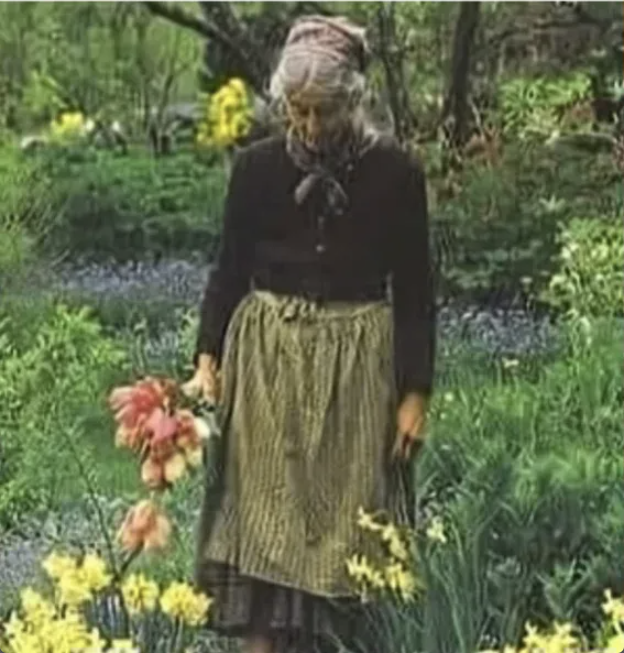
The photograph shows an elderly woman from behind, standing in a garden among flowers, wearing a long skirt and dark top. Her posture is slightly bent, her hair white or gray, her body showing clear signs of age. But inside that elderly body is the same person who was once a young girl, a teenager, a young woman, a mother—all those earlier versions still present, still part of who she is, still influencing how she experiences being alive.
This perspective challenges how we think about aging and elderly people. We tend to see them as fundamentally different from younger people—as if crossing into old age transforms you into a different category of human with different internal experiences. But this woman’s reflection suggests that’s wrong. That elderly people aren’t different kinds of people—they’re the same people they’ve always been, just living in bodies that have aged.
When we interact with elderly people as if they’re alien or incomprehensible, we’re missing this truth. When we speak to them like children or treat them as if they’re not fully present, we’re ignoring that inside is a person who’s been conscious and experiencing life for decades, who carries memories and identity and selfhood that hasn’t diminished just because their body has changed.
The voice inside her head never aged. It’s still the voice of the young girl wondering when she’ll grow up, still the consciousness that’s been present through every stage of her life, still the same person experiencing the world even though her body and circumstances have transformed completely.
She watched her body change—external transformation she observed happening but couldn’t stop. She watched her faculties dull—mental and physical decline she experienced but didn’t choose. But the person inside never grew weary or faded. That essential self remained constant, vital, unchanged by the aging process that affected everything around it.
Our spirits are eternal. When you see an elderly person, remember they’re still a child at heart—still the same person they’ve always been, just in an older body. They need purpose and love just like we all do, because age doesn’t change fundamental human needs. It just changes our ability to meet them independently.
The woman standing in the garden among flowers is elderly from outside perspective. But from inside perspective—from the view of the consciousness experiencing being her—she’s ageless. Still herself. Still wondering, in some ways, when she’ll finally grow up and feel old, because the internal experience hasn’t matched the external transformation.
This is what growing old feels like, she’s saying. Like being the same person you’ve always been while watching everyone treat you as if you’ve become someone different. Like carrying all your earlier selves inside while the world sees only your current elderly body. Like having an ageless spirit living in a body that clearly ages, creating a disconnect between how you feel and how you’re perceived.
When younger people fear aging, maybe what they’re really fearing is this disconnect—becoming invisible, being treated as less than, losing autonomy and respect because their body has changed. But this woman’s reflection offers something reassuring too: that you don’t lose yourself in aging. That the core of who you are remains intact even when everything else changes. That growing old doesn’t mean becoming someone different—it means being yourself in an older body, watching the world change around a spirit that stays surprisingly constant.