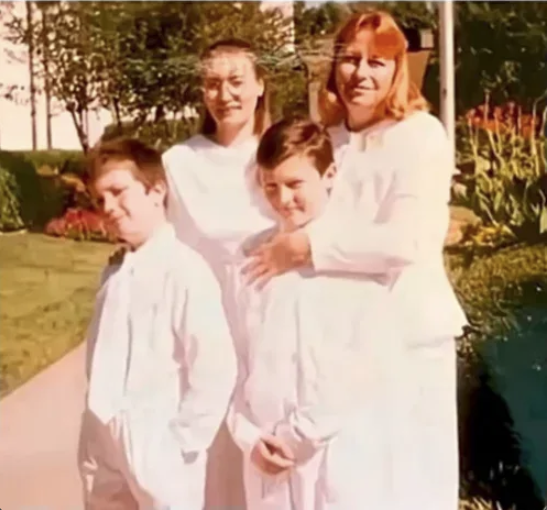
His brother was lucky in foster care, but he wasn’t. Four homes in three years, each one worse than the last. The kind of foster care experience that breaks children—homes where nobody cared, where abuse was ignored, where surviving meant becoming invisible and hoping you’d age out before something worse happened.
But every few months, Ms. Ripley would take them out to lunch. Not as their caseworker or legal guardian, just as someone who cared. Someone who noticed two boys in terrible situations and chose to stay connected even when she had no official obligation.
One day, she saw the scars on his arms.
Physical evidence of what he’d been enduring. Marks that told stories he couldn’t speak. Proof that these foster homes weren’t just bad but dangerous. She saw them and without saying a word, she made space for him in her home.
Just like that. No lengthy discussions or official processes first. Just immediate action—seeing a child in danger and removing him from it. Taking him into her home not because the system required it but because he needed safety and she could provide it.
After Mr. Ripley passed away from cancer, she could have sent them back. Could have decided that raising foster children as a widow was too difficult. Could have used her grief as justification for choosing an easier path. Nobody would have blamed her. Losing your husband while raising other people’s traumatized children is more than most people could handle.
But instead, she fought to adopt them and raised them in a tiny trailer full of love.
Not a big house or comfortable circumstances. A tiny trailer. Limited resources. A widow working odd jobs to make ends meet. But filled with love—the kind that actually matters, the kind that heals, the kind that tells broken children they’re worth fighting for.
She worked odd jobs to support them. Gave them game nights when she was exhausted. Always said, “You belong to us now.” Not you’re staying here temporarily or we’ll see how this works. But you belong—permanent, unconditional, the words foster children desperately need to hear.
“I should’ve ended up broken, but I joined the Marines and graduated from law school.”
Because that’s what stable, loving homes do. They don’t guarantee perfect outcomes, but they make good outcomes possible. They give traumatized children the foundation to build lives. They prove that where you start doesn’t determine where you end.
He should have ended up broken. Statistics said he would. Four homes in three years, each worse than the last. Abuse significant enough to leave visible scars. The kind of childhood that creates dysfunction, addiction, incarceration—all the predictable outcomes of severe childhood trauma.
But Ms. Ripley intervened. Saw his scars and made space in her home. Fought to adopt him after her husband died. Raised him in a tiny trailer with odd jobs and game nights and constant affirmation that he belonged. Gave him what statistics rarely account for: one person who refuses to give up on you.
Now, as a father himself, he knows she didn’t just save his life—she built it.
Saving his life would have been removing him from danger. That would have been enough—getting him out of abusive homes, keeping him physically safe until he aged out. Many foster parents do that and deserve recognition for it.
But Ms. Ripley did more. She built his life. Created a foundation of love and stability. Worked odd jobs to give him opportunities. Fought the system to make him permanently hers. Raised him in a tiny trailer that felt bigger than any mansion because it was full of genuine care. Showed him that he was worth fighting for, worth sacrificing for, worth loving unconditionally.
She built the foundation that allowed him to join the Marines, to graduate law school, to become a father himself. She gave him a life worth living and the tools to build it into something meaningful.
Some people save lives by dramatic intervention—pulling people from danger in singular heroic moments. But Ms. Ripley saved his life by building it slowly, steadily, day by day in a tiny trailer. By working odd jobs and hosting game nights. By saying “you belong to us now” and meaning it. By fighting to adopt when she could have let the system take them back.
She didn’t just save his life. She built it. And that made all the difference.