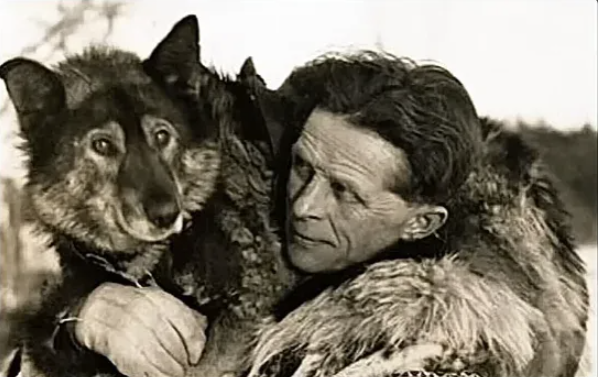
They said the whole town would die… unless one dog did the impossible.
In 1925, a deadly disease hit Nome, Alaska. Diphtheria—a bacterial infection that kills by suffocating victims when toxins create thick coverings in the throat that block airways. Children were especially vulnerable. And Nome’s supply of antitoxin serum, the only treatment that could save infected patients and prevent the disease from spreading, had expired.
Fresh serum existed, but it was in Anchorage—hundreds of miles away across some of the most brutal terrain in North America in the middle of an Alaskan winter.
Planes couldn’t fly. The weather conditions were too severe—blizzards, deadly winds, temperatures far below zero, visibility near nothing. Attempting to fly in those conditions meant almost certain death for pilots, and the serum wouldn’t survive if the plane crashed.
Ships were frozen solid. Nome’s port was icebound, impassable, completely inaccessible by water. There was no way to bring the serum by sea.
And the medicine was hundreds of miles away. The distance and conditions made automobile travel impossible. The only option was dog sled relay—multiple teams of sled dogs running segments of the journey, passing the serum from team to team across the frozen wilderness, racing against time and weather to get life-saving medicine to Nome before more children died.
So a Siberian Husky named Togo stepped forward. Actually, Togo’s musher Leonhard Seppala chose him to run the most dangerous, difficult leg of the relay—over 260 miles through blizzards, cracking ice, and deadly winds. Farther than any other dog on the relay. The longest, hardest segment that would test every ounce of strength, intelligence, and determination Togo possessed.
He was 12 years old—elderly for a sled dog, past prime working age, small for his breed. Nobody would have blamed Seppala for choosing younger, stronger dogs. But Togo was his lead dog, proven over years of running, trusted completely. And this run required not just strength but intelligence, experience, and the kind of determination that doesn’t quit even when conditions become impossible.
Running over 260 miles through blizzards, cracking ice, and deadly winds… farther than any other dog on the relay. The conditions were beyond brutal. Temperatures dropped to 40 below zero. Winds created whiteout conditions where visibility disappeared completely. The trail crossed Norton Sound, where ice was unstable and breaking apart, where one wrong step could plunge the entire team into freezing water.
Togo led his team across all of it. When ice cracked beneath them, he navigated to safety. When blizzards made the trail invisible, he found the way forward. When winds tried to freeze them in place, he kept pulling. For 260 miles through conditions that would kill unprepared humans in hours, this 12-year-old Siberian Husky led his team forward, carrying serum that would save Nome’s children.
They say heroes wear capes… but this one wore frost on his fur. The photograph shows Togo with his musher—a black and white image capturing a man in fur clothing holding a dog whose coat shows the effects of extreme cold conditions. Togo’s fur would have been covered in frost and ice from his breath freezing in the extreme temperatures, from snow accumulating during the run, from the physical evidence of running 260 miles through an Alaskan winter.
No cape, no costume, no dramatic visual signifier of heroism. Just a working sled dog who ran farther through worse conditions than any other dog on the relay that saved Nome. Just frost on his fur and determination that didn’t quit.
And even today, people argue the world never truly understood what Togo sacrificed. Because there’s another dog associated with the Nome serum run—Balto, who ran the final leg into Nome and received most of the recognition, monuments, and lasting fame. Balto’s run was approximately 55 miles, the shortest and final segment, arriving in Nome to public celebration and immediate national attention.
Togo ran 260 miles—nearly five times farther—through the most dangerous conditions, across the unstable ice of Norton Sound, through blizzards and deadly winds, carrying the serum across the segments that other mushers feared most. He was 12 years old and small for his breed, and he led his team through hell and delivered the serum safely to the next team in the relay.
But Balto became famous. Balto got the statue in Central Park, the movie adaptations, the name recognition that has lasted a century. Togo’s contribution was acknowledged by mushers and those familiar with the serum run’s actual details, but popular culture celebrated Balto while Togo remained relatively unknown to the general public.
“So what do you think—did he ever get the credit he deserved?” The question hangs over Togo’s legacy. Sled dog enthusiasts and historians know his story, understand that his run was the most impressive, most difficult, most crucial to the relay’s success. But public recognition? That went primarily to Balto, whose run, while important, was neither the longest nor the most dangerous nor the most physically demanding.
Some might argue that Togo got appropriate recognition within the mushing community, that people who understand sled dogs know his story and appreciate his accomplishment. Others argue he deserved the broader public recognition that Balto received, that children should learn his name when they learn about the Nome serum run, that his statue should be in Central Park.
What’s undeniable is that without Togo’s 260-mile run through impossible conditions, the serum doesn’t make it through the most dangerous segments. Without his leadership across Norton Sound’s unstable ice, his navigation through whiteout blizzards, his determination to keep pulling when conditions should have stopped them, Nome’s children don’t get their medicine in time.
Balto completed the relay and deserves recognition for his role. But Togo made the relay possible by conquering the segments other mushers feared most. At 12 years old—ancient for a sled dog running such distances—he proved that heroes aren’t always young and strong. Sometimes they’re elderly and small and powered entirely by determination and heart.
They say heroes wear capes… but this one wore frost on his fur. Carried hope for dying children through 260 miles of hell. Led his team across cracking ice and through blinding blizzards. Ran farther than any other dog on the relay that saved Nome.
And even today, people argue the world never truly understood what Togo sacrificed. That public recognition went to the wrong dog, that fame chose the final runner rather than the one who conquered the impossible segments, that Togo’s legacy deserves to be as widely known as Balto’s.
So what do you think—did he ever get the credit he deserved? Or does Togo remain what he’s been for nearly a century—a hero primarily known to those who dig deeper than popular narratives, whose sacrifice is understood by mushers and historians but overlooked by the broader public who learned about Balto without ever hearing Togo’s name?
The serum made it to Nome. Children were saved. The relay succeeded because multiple teams of dogs and mushers risked everything across hundreds of miles of frozen wilderness. But one dog ran 260 miles—farther than any other, through the worst conditions, at 12 years old—wearing frost on his fur and carrying hope that saved a town.
His name was Togo. And whether he got the credit he deserved remains a question worth asking a century later.