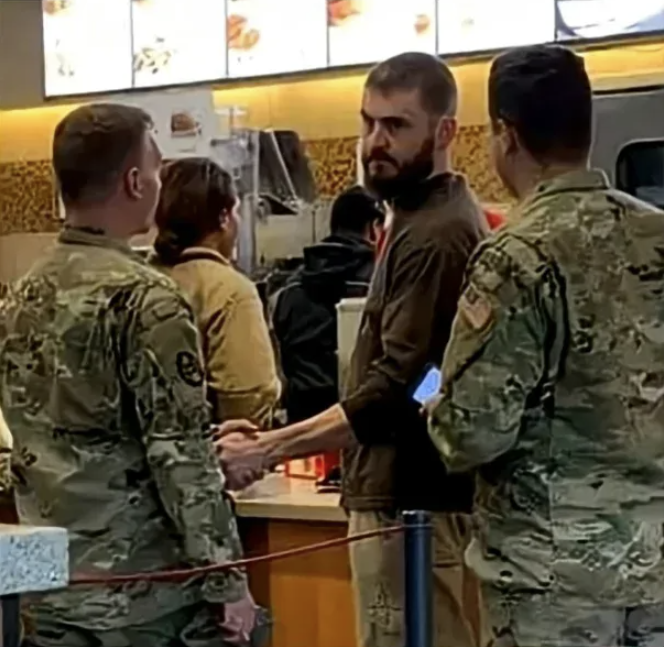
Jonathan Full walked into Chick-fil-A planning to buy one meal for one soldier. A small gesture of thanks. But when he saw eleven of them standing in line, he couldn’t choose. So he paid for all of them. If 200 more showed up, he said, I’d still buy the meal.
The soldiers were grateful, but they didn’t know the real reason Jonathan was there. He wasn’t just thanking them for their service. He was honoring his brother Joshua—a veteran who fought bravely overseas but lost his most devastating battle at home. PTSD doesn’t leave visible scars. It doesn’t show up in photos or ceremonies. But it’s just as deadly as any battlefield wound.
As Jonathan handed out meals, he asked each soldier to do one thing: look after one another. Check in on each other. Notice the signs that someone might be struggling. Never ignore the invisible wounds.
Because Joshua’s wounds were invisible too. And in the end, no one caught them in time.
There’s something profoundly human about the way grief transforms into action. Jonathan could have stayed home. Could have carried his loss quietly, privately, without ever speaking his brother’s name in a Chick-fil-A surrounded by strangers. But instead, he turned his pain into purpose. He stood in front of eleven soldiers and said: My brother didn’t make it. Please don’t let that happen to each other.
PTSD is invisible. Depression is invisible. Trauma hides beneath uniforms and smiles and the facade of strength that soldiers are trained to project. And too often, by the time anyone notices, it’s too late.
Jonathan couldn’t save his brother. But he could stand in a fast-food restaurant and tell eleven soldiers that their invisible wounds matter. That checking in matters. That looking after one another isn’t optional—it’s survival.
The soldiers thanked him. But the truth is, Jonathan wasn’t looking for thanks. He was looking for a promise. A commitment that maybe, just maybe, the next veteran struggling in silence won’t have to fight alone.
Joshua fought bravely. But PTSD doesn’t care about bravery. It doesn’t respect medals or service records. It just takes. And it takes quietly, invisibly, until someone finally notices—or until it’s too late.
Jonathan is making sure people notice. One meal at a time. One conversation at a time. One soldier at a time.
Because the invisible wounds are the ones we can’t afford to ignore.