When Houston flooded, most people evacuated or hunkered down to wait out the disaster. But a U.S. Border Patrol Agent saw the news footage and made a different choice. He loaded his own boat, used his vacation time, and drove to Houston—not because it was required, but because people were drowning and he had the skills to help.
For four straight days, he worked until 3:30 in the morning. No proper meals. Barely any sleep. Just constant motion through flooded streets, pulling strangers from rooftops and submerged cars. He rescued families clinging to furniture as water rose through their homes. He found elderly residents trapped in attics, too weak to break through to safety. He pulled abandoned pets from flood waters, animals left behind in the chaos of evacuation.
The work was exhausting in ways that go beyond physical fatigue. Each rescue carried the weight of lives that would have been lost without intervention. Each flooded street held people calling for help, their voices barely audible over the sound of rushing water. He kept going because stopping meant leaving someone behind, and his conscience wouldn’t allow that calculation.
When he finally made it home at 9:30 PM, sunburned and starving, his body was screaming for rest. But thirty minutes later, he reported for his regular shift as a Border Patrol Agent. Because duty doesn’t pause for exhaustion. Because other people were counting on him to show up. Because his heart wouldn’t let him rest while others still needed help.
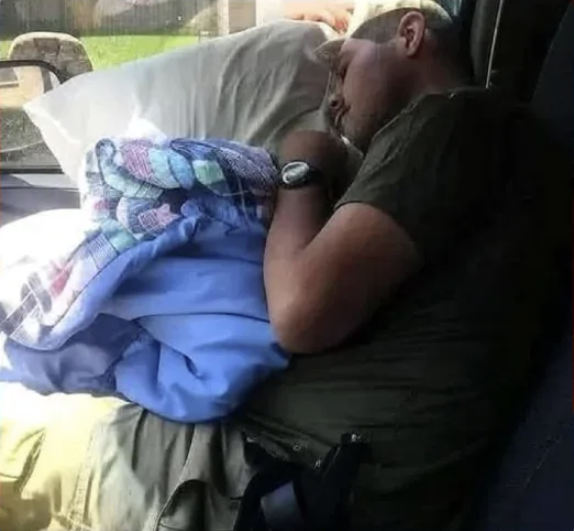
The photograph shows him asleep in his vehicle, his head resting on a pillow, finally surrendering to exhaustion between responsibilities. It’s the kind of image that captures what heroism actually looks like—not dramatic movie scenes, but bone-deep tiredness earned through days of selfless action. Not glory, but the quiet aftermath of doing what needed to be done regardless of personal cost.
His friend posted about him with simple words: “This is my hero.” Not because of the uniform or the rescues alone, but because of the character revealed in those choices. The decision to use vacation time for disaster relief. The refusal to stop while people needed help. The commitment to regular duty even when exhausted beyond measure. The understanding that being capable means being responsible.
We often debate what makes someone heroic. We argue about whether certain professions deserve that title or whether specific actions qualify. But this Border Patrol Agent’s story cuts through all that noise with a simple truth: heroes are the people who see suffering and sacrifice their own comfort to address it. They don’t calculate whether they’ll get credit or whether anyone will notice. They just load their boat, drive toward danger, and work until the people who needed saving are safe—then show up for their next shift because that’s what commitment looks like.
Four days in flood waters. Thirty minutes at home. Then back to protecting borders. That’s not superhuman—it’s what happens when someone with skills meets a crisis and refuses to look away. It’s exhausting, unglamorous, and absolutely essential. And it’s exactly the kind of heroism our world runs on, even when we forget to notice it.