Every weekend, Maya volunteered at the county shelter. She’d arrive Saturday morning and stay through Sunday afternoon, walking dogs and cleaning kennels and doing the unglamorous work that keeps shelter animals cared for while they wait for homes that might never come.
The shelter had numbered kennels, and Bear lived in kennel seven. A twelve-year-old shepherd mix with a gray muzzle and eyes that had seen too many people walk past without stopping. He was quiet in a way that made him easy to overlook—not barking for attention, not jumping at the chain-link, not performing the behaviors that convince people a dog is worth noticing.
Maya passed kennel seven dozens of times over months of volunteering. She’d glance in, see Bear lying calmly in his space, and move on to the dogs who seemed more urgent—the ones barking, the young ones with better adoption chances, the ones who hadn’t been there as long. Bear never demanded her attention, so he didn’t get it. That’s how overlooked dogs stay overlooked. They’re too polite, too quiet, too old, too gray around the muzzle.
For months, this pattern continued. Maya volunteering faithfully, Bear waiting patiently, their paths crossing but never quite connecting. Other dogs got adopted. New dogs arrived. The population shifted constantly, but Bear remained—a quiet, aging constant in kennel seven that everyone saw but nobody chose.
Then came a rainy Tuesday. Maya had finished her regular shift at her job as a veterinary technician. It had been one of those days where nothing goes right—difficult cases, emotional goodbyes, the kind of shift that leaves you drained and questioning why you work with animals when animals break your heart so regularly.
She could have gone home. Should have gone home, probably. But she found herself driving to the shelter instead, still in her work scrubs, needing to be around animals who were still fighting for their chance even when the world kept overlooking them.
She filled out adoption paperwork at the front desk. Not for any dog in particular—she hadn’t planned this. But suddenly she knew she was taking someone home tonight. Someone who needed her. Someone she needed.
Then she bought a dog bed. New, soft, the kind Bear had probably never had. And she opened kennel seven.
Bear lifted his gray muzzle when the door opened. How many times had his door opened over the years—for cleaning, for brief walks, for medical checks—only to close again with him still inside? How many times had he allowed himself to hope this was finally it, only to return to the same small space, the same waiting, the same quiet overlooked existence?
Maya clipped a leash to his collar and whispered two words that changed everything: Let’s go home.
Bear stood slowly, his twelve-year-old body taking its time, joints protesting slightly from lying on concrete. He followed her out of the kennel with deliberate steps, his tail giving a single, tentative wag. Not the wild celebration of a young dog, but something more profound—a cautious acknowledgment that maybe, finally, waiting was over.
They walked through the shelter together, past the other kennels where dogs barked and jumped, seeking the attention Bear had never demanded. They walked past the front desk where Maya had signed papers making her responsible for this quiet, overlooked senior dog who’d spent months being passed over for younger, flashier options.
His waiting was over. After months in kennel seven, after countless people walking past without seeing him, after being too quiet and too old and too gray to catch anyone’s attention—it was finally over. Not because he’d changed or performed or done anything to earn it. Just because one person, on one difficult rainy Tuesday, finally really saw him.
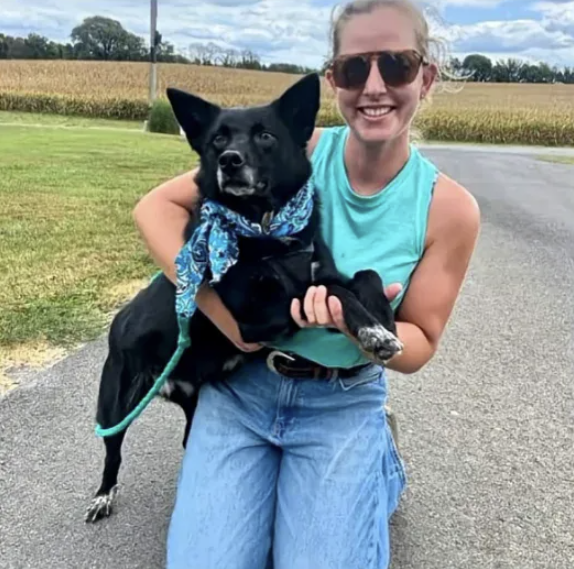
The photograph shows them together now—Maya holding Bear in an open field, both of them grinning, Bear wearing a blue bandana that matches the sky behind them. He looks completely different from the quiet, overlooked dog in kennel seven. He looks alive, joyful, like he finally understands that this time the door opening meant something permanent.
Maya looks different too—not exhausted from a difficult shift, but lit up with the particular joy that comes from choosing the one nobody else wanted and discovering they’re exactly who you needed all along.
Senior dogs like Bear get overlooked constantly. Shelters fill with them—the ones who had families until those families decided they weren’t cute enough anymore, weren’t playful enough, needed too much veterinary care, didn’t fit the lifestyle. They’re abandoned in staggering numbers, left to wait in kennels while people walk past looking for puppies and young dogs with more years ahead of them.
But what those people miss is what Maya discovered: that senior dogs know how to be grateful in ways puppies never can. That they’ve already learned patience and gentleness. That their quiet isn’t disinterest—it’s peace. That gray muzzles and slower walks come with depths of loyalty and appreciation that young dogs haven’t developed yet.
Bear spent months in kennel seven being too quiet to notice. Now he spends his days in a home with someone who sees his quietness not as a flaw but as the exact right temperament for her life. Who values his calmness after her difficult shifts. Who doesn’t need him to perform or entertain, just to be the steady, gentle presence he already is.
His waiting is over. But more than that—his being overlooked is over. He’s finally with someone who chose him specifically, deliberately, not despite his age and quietness but because of it. Someone who saw past the gray muzzle to the soul underneath that had been waiting, hoping, trusting that eventually the right person would open the door and mean it.
Maya volunteers at the shelter still, walking past kennel seven every weekend. But now it houses a different dog, waiting for their person the way Bear waited for his. And she looks at whoever’s there and remembers that sometimes the quiet ones, the overlooked ones, the ones who don’t demand attention—sometimes they’re the ones who’ve been waiting for you specifically. You just have to finally see them.
Bear’s tail still wags—single, tentative movements that say everything about a dog who learned not to hope too much but is slowly remembering that now, finally, hope is safe. His waiting is over. And Maya’s difficult days are easier now, knowing she’s coming home to the quiet, gentle, overlooked dog who needed her exactly as much as she needed him.