Rob Kenney was fourteen when his father made an announcement that shattered his childhood: he didn’t want to be a parent anymore. Not that he was struggling, not that he needed help, not that circumstances were making parenting difficult. Simply that he was done. He didn’t want the responsibility of children anymore, so he was walking away.
With his mother battling alcoholism, unable to provide the stability a teenager desperately needs, Rob moved in with his newlywed brother. Essentially raising himself, navigating adolescence and young adulthood without the guidance most people take for granted. Learning how to shave through trial and error. Figuring out how to tie a tie by studying pictures. Teaching himself basic life skills that fathers typically pass down to their sons.
The abandonment could have destroyed him. Statistics aren’t kind to kids who grow up without engaged parents, who have to figure out life’s basics on their own. But somewhere in the pain of being unwanted by his father, Rob made a vow: he would never abandon his own children. He would be present, engaged, teaching them everything they needed to know. He would be the father he’d never had.
He raised two kids with that commitment at the center of everything. Showing up for every moment, teaching every skill, being the steady, reliable presence his own father had refused to be. And in doing that, he discovered something: he’d become good at the practical side of fatherhood. The how-to-fix-things, how-to-handle-basic-tasks kind of knowledge that accumulates when you’re determined to be prepared for your kids’ questions.
After his children were grown, Rob launched a YouTube channel with a simple concept: “Dad, How Do I?” Videos teaching basic life skills—how to tie a tie, how to check your oil, how to use a stud finder, how to shave, how to unclog a drain. Practical knowledge delivered with warmth and patience, as if he were talking to his own kids.
He expected maybe thirty subscribers. Friends, family, a few random people who stumbled across his videos. He wasn’t trying to build an empire or become an influencer. He just thought maybe there were a few other people out there who’d missed out on having someone teach them these basics, and he could help fill that gap.
Today, five million people call him Dad. Five million subscribers who send Father’s Day cards and messages thanking him for being the father figure they never had. People who learned to tie a tie for job interviews from his videos, who figured out basic home repairs, who just needed to hear someone patient and kind walk them through tasks that feel impossible when you’ve never been shown.
The comment sections on his videos are heartbreaking and beautiful simultaneously. Person after person sharing stories of absent fathers, of never being taught basic skills, of feeling lost and incompetent because nobody showed them how to do simple tasks everyone else seems to know instuitively. And person after person thanking Rob for filling that gap, for being the dad they needed, even if only through a screen.
Rob later forgave his father. Not because his father deserved it or earned it or even asked for it, but because Rob understood that carrying bitterness would only poison his own life. That forgiveness is something you do for yourself as much as for the person who hurt you. That healing requires letting go of the anger even when the hurt remains.
But here’s the remarkable thing: Rob transformed his abandonment into a gift for millions who never had a dad. He took the most painful experience of his childhood—being unwanted, being told he wasn’t worth his father’s time or energy—and turned it into fuel for becoming the father figure millions of people desperately needed.
The YouTube channel isn’t just about practical skills. It’s about the tone Rob uses, the patience in his explanations, the way he anticipates where people might struggle and offers reassurance. It’s about the implicit message underlying every video: you’re worth teaching. Your questions aren’t stupid. It’s okay that nobody showed you this before. I’m here now, and I’ll help you figure it out.
That’s what father figures do—not just teach skills, but convey worth. Not just answer questions, but create safe space for not knowing. Not just demonstrate tasks, but offer the emotional scaffolding that says: you’re capable, you can learn this, and I believe in you enough to take the time to show you.
Five million subscribers represent five million people who connected with that message. Who needed exactly what Rob was offering—not just instructional content, but the feeling of being cared for by someone patient and kind. Who found in his videos something they’d been missing, sometimes without even fully realizing they were missing it until they clicked on a video about how to check tire pressure and found themselves crying at how much they needed someone to teach them with kindness.
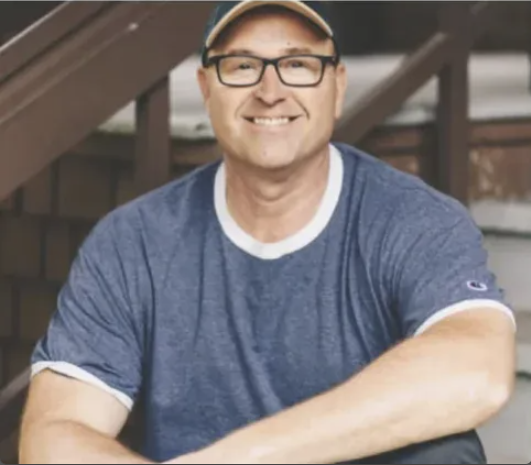
The photograph shows Rob smiling, wearing a baseball cap and glasses, looking like exactly what he is—a regular dad who decided to share what he knows. There’s nothing flashy or performance-oriented about him. He’s just a man who vowed never to abandon his children, who kept that vow, and who then extended that same commitment to millions of strangers who needed a dad.
At fourteen, his father told him he didn’t want to be a parent anymore. That rejection could have defined Rob’s life in destructive ways. Instead, he used it as the foundation for something redemptive—proving through his own parenting, and now through his channel, that children are worth showing up for. That teaching basic skills with patience and kindness matters. That being present is the most fundamental gift a father can give.
“Dad, How Do I?” has taught millions of people how to do practical tasks. But more importantly, it’s taught them something else: that they deserved to have someone care enough to teach them these things. That the absence they experienced wasn’t their fault. That it’s never too late to learn the basics you missed. That somewhere out there, someone is willing to be the dad they never had, even if only through a screen.
Rob transformed abandonment into a gift. Not by pretending the abandonment didn’t hurt or didn’t matter, but by refusing to let it define him destructively. By choosing to be for millions what his father refused to be for him. By turning his pain into purpose and his vow to his own children into a service for everyone who shares similar wounds.
At fourteen, he lost his father. At much older, he became Dad to five million people who send him Father’s Day cards and thank him for teaching them how to tie a tie, change a tire, and believe they’re worth someone’s patient, kind attention.