A stray dog wandered into an Acapulco bus station looking for shelter. Probably hungry, certainly homeless, seeking any safe space where humans might not chase him away. Bus stations aren’t ideal homes, but they offer some advantages for street dogs—constant activity means dropped food, covered areas provide shelter from weather, and the flow of people might include some who show kindness.
He quickly won over the hearts of the staff. Not through performing tricks or being unusually cute, but probably through the persistent presence that stray dogs develop—showing up daily, being friendly without being demanding, creating the kind of relationship where staff start recognizing him, then watching for him, then actively caring about him.
They named him Firulais—a common Mexican name for dogs, the equivalent of “Spot” or “Buddy” in English. But naming him meant something more than just having something to call him. It meant acknowledging him as an individual, as their dog rather than just a stray who happened to hang around. Names create relationship, transform anonymous animals into known beings with identity and importance.
And they decided to make it official. Not just tolerating his presence or even affectionately allowing him to hang around, but actually incorporating him into the bus station’s operation. Making him part of the team in ways that went beyond keeping him fed and safe.
Two years ago, they even printed him a real employee ID badge. An official-looking identification card listing his duties as “Street Calmer” and “Route Supervisor”—playful titles that also happen to be accurate. The badge makes visible what had already become true: Firulais isn’t just a stray dog being tolerated at the bus station. He’s an employee with responsibilities, a valued member of the team with actual functions he performs.
“Street Calmer” recognizes his effect on the atmosphere. Dogs have a way of making public spaces feel more welcoming, less institutional. Their presence creates opportunities for human interaction—people stopping to pet him, commenting on how cute he is, sharing a moment of warmth in an otherwise transactional environment. Firulais calms the street not through any trained behavior but simply by being a friendly dog in a place where people are often stressed about travel.
“Route Supervisor” acknowledges that he keeps an eye on the passengers. Watching who comes and goes, being present in the station in ways that create an additional layer of informal security. Not aggressive or protective in threatening ways, but observant. The kind of presence that makes passengers feel like someone’s paying attention, like the space is cared for enough that even the dog knows what’s happening.
Today, Firulais enjoys fresh water, food, and a team watching over him. His basic needs are met not as charity to a stray but as compensation for an employee. The staff who once just tolerated his presence now actively care for him, make sure he has what he needs, treat him as part of their work family rather than as a problem to be managed.
While he keeps an eye on the passengers. Maintaining his duties as Street Calmer and Route Supervisor, being present in the station, doing the work that earned him his employee badge. From his perspective, probably, he just found a good place to stay and good people who feed him. But from the passengers’ and staff’s perspective, he’s transformed the bus station from just a transit point into a place with personality and warmth.
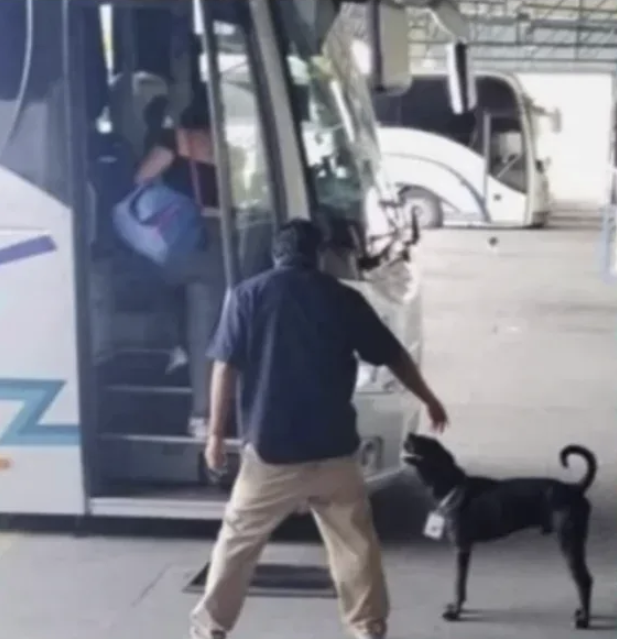
The photograph shows Firulais—a black dog of medium size—walking near a bus, a staff member in uniform nearby. He looks confident, comfortable, clearly at home in this environment. Not slinking or fearful like many street dogs, but moving with the assurance of someone who belongs, who has a place and purpose here.
From homeless to loved and employed, he’s now part of the family. This transformation speaks to something beautiful about how small acts of inclusion can change lives. The staff could have called animal control, could have chased him away, could have tolerated his presence grudgingly. Instead, they embraced him, named him, formalized his role, and created a situation where everyone benefits.
Firulais benefits obviously—he has food, water, shelter, safety, and human companionship. But the staff and passengers benefit too. The station has a mascot who makes the environment friendlier and more memorable. Staff have a team member who provides unconditional positive presence. Passengers have a brief moment of joy in spotting and interacting with the bus station dog.
The employee ID badge is simultaneously humorous and serious. Humorous because obviously a dog doesn’t need official identification, doesn’t receive a salary, isn’t a legal employee in bureaucratic terms. But serious because it represents genuine inclusion, actual valuing of Firulais’s contribution to the bus station, official recognition that he matters to this place and these people.
His duties as Street Calmer and Route Supervisor may sound made-up, but they’re real. Anyone who’s traveled through bus stations knows they can be stressful, impersonal places where you’re just another anonymous traveler trying to get somewhere. Having a friendly dog present—one who’s clearly cared for, who belongs there, who creates opportunities for small positive interactions—genuinely does calm the atmosphere.
And having an observant presence who’s always there, who knows the patterns and routines, who notices what’s normal and what’s unusual—that genuinely does create an informal supervisory role. Firulais probably alerts staff to problems, responds to unusual situations, serves as an early warning system through his reactions and behavior.
Two years with an employee badge means this isn’t a temporary gimmick or publicity stunt. It’s a sustained commitment to including Firulais as an actual member of the bus station team. For two years, they’ve maintained this fiction-that’s-actually-truth, treating him as an employee with duties and responding care.
The Acapulco bus station could be just another transit facility—functional but forgettable, serving its purpose without creating any particular emotional response. Instead, because staff chose to embrace a stray dog and formalize his role, it’s become a place with a story. A place where travelers might smile recognizing Firulais, where staff take pride in their unusual team member, where a dog who was once homeless now has purpose and family.
From homeless to loved and employed—that’s Firulais’s transformation. From wandering into a bus station looking for shelter to having an employee badge, official duties, and a team watching over him while he keeps an eye on passengers. From street dog to Street Calmer and Route Supervisor. From stray to family.
All because staff at an Acapulco bus station saw a homeless dog and chose inclusion over exclusion, chose to formalize rather than merely tolerate, chose to create an official role for an unofficial member of their team who makes their workplace better simply by being there.