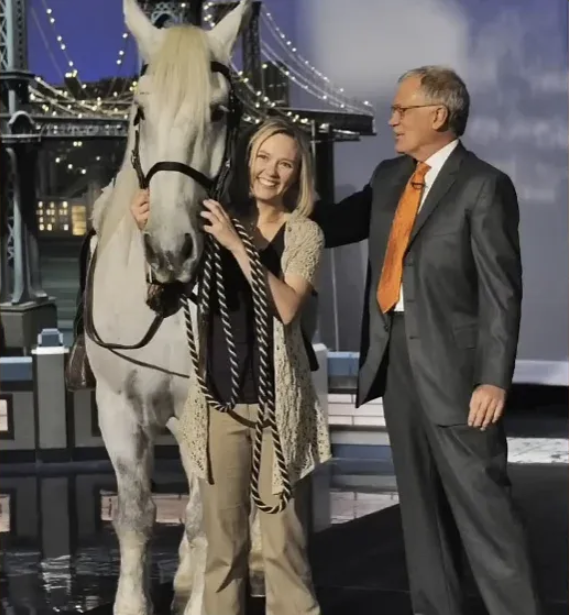
Erin Bolster was out riding when she saw something that would make most people freeze: a grizzly bear chasing a young boy and his horse. Not wandering nearby. Not moving through the woods at a safe distance. Actively chasing them. The boy was in immediate danger, and time wasn’t a luxury anyone had.
Most people, in that moment, would have done the rational thing. The safe thing. They would have called for help, made noise to distract the bear, or removed themselves from the situation entirely. Grizzly bears are apex predators. They can run faster than horses, hit harder than humans can imagine, and when they’re in pursuit mode, they’re extraordinarily dangerous.
Erin didn’t calculate those odds. She didn’t weigh her safety against the boy’s. She just acted.
She charged at the bear. Three times. Drove it away from the boy and his horse through sheer determination and possibly a healthy dose of protective fury that overrode every survival instinct most humans possess. She placed herself between a child and a grizzly bear, and she won.
The horse she was riding wasn’t even hers. It was a leased horse—borrowed, temporary, part of her life but not permanently. After the incident, after the adrenaline faded and the reality of what had happened settled in, Erin bought him. Because when a horse stands steady while you charge a grizzly bear three times, when an animal trusts you enough to face danger instead of fleeing, that creates a bond that can’t be ignored.
She named him. Kept him. Made permanent what had been temporary, because some partnerships are forged in moments too significant to walk away from.
Years later, Erin found herself on a stage, holding that horse’s lead rope, being recognized for what she’d done. The story had traveled. People heard about the woman who charged a grizzly bear to save a stranger’s child and thought: that deserves acknowledgment. That deserves to be celebrated.
But here’s what makes this story remarkable beyond the obvious heroism: Erin didn’t know that boy. He wasn’t her son, her nephew, her neighbor’s kid. He was just a child in danger, and that was enough. She didn’t pause to consider whether saving him was her responsibility. She didn’t calculate whether his life was worth risking hers. She just saw someone who needed help and decided that if she had the ability to provide it—even at enormous personal risk—she would.
That’s not normal. That’s extraordinary. Most people have a strong self-preservation instinct. It’s biological, automatic, designed to keep us alive. Overriding it requires something most people don’t possess: the willingness to value someone else’s life as much as, or more than, your own.
Erin had it. Whether she’d always had it or whether it emerged in that moment of crisis, she demonstrated a kind of courage that goes beyond bravery. Bravery is facing danger despite fear. What Erin did was something else—instant, protective instinct that didn’t even pause to feel fear first.
The boy lived because she acted. His horse survived because she intervened. And somewhere in the aftermath, when the bear had retreated and the danger had passed, someone probably asked her why. Why would you do that? Why would you risk your life for a stranger?
And Erin probably didn’t have a complicated answer. Because people like her rarely do. They don’t see themselves as heroes. They just see themselves as people who did what needed to be done.
But the rest of us see something different. We see what humanity looks like at its absolute best. When someone has the power to help and chooses to use it, regardless of cost. When protection of the vulnerable becomes more important than self-preservation. When a stranger’s child matters as much as your own safety.
The horse she rode that day probably didn’t understand what was happening. Animals don’t conceptualize heroism or self-sacrifice. But he felt Erin’s intention, followed her lead, stayed steady when every instinct probably told him to run. And because of that partnership—human and animal working together in a moment of crisis—two lives were saved that day instead of lost.
After the incident, Erin bought him. Not because she needed another horse. Not because it was practical or planned. But because you don’t walk away from a creature who stood with you when you charged a grizzly bear. You honor that. You make it permanent.
The stage where she was recognized probably felt surreal. Bright lights, applause, people celebrating something that felt, to her, like simply doing what was necessary. But those acknowledgments matter. Not because Erin needs validation, but because the rest of us need reminders.
Reminders that humans are capable of extraordinary courage. That selflessness still exists. That when crisis comes, some people run toward danger instead of away from it. That the instinct to protect, to save, to put someone else’s survival ahead of your own—that instinct isn’t dead. It’s just rare. And when we witness it, we should celebrate it.
Erin Bolster charged a grizzly bear to save a child she’d never met. She did it three times, until the threat was neutralized, until the boy was safe. And then she went on with her life, probably not considering herself exceptional, probably just grateful everyone survived.
But she is exceptional. Not because she’s superhuman, but because when faced with an impossible choice—risk everything or let a child die—she made the choice that most people hope they’d make but will never actually be tested on.
The boy she saved grew up. He’ll have his own life, his own family, his own story. And woven into the fabric of that story, invisible but foundational, is the fact that he exists because a woman he didn’t know decided his life was worth defending.
That’s not something you repay. It’s something you carry. A reminder that you’re here because someone else was brave. And maybe, if the moment comes, you pass that forward. You become the person who acts when someone else needs help. You become the kind of person Erin was that day.
The horse lives with her now. Permanent instead of temporary. A daily reminder of the day they faced a grizzly bear together and won. Not because they were stronger, but because Erin was braver.
And somewhere, a young man is alive because of it.