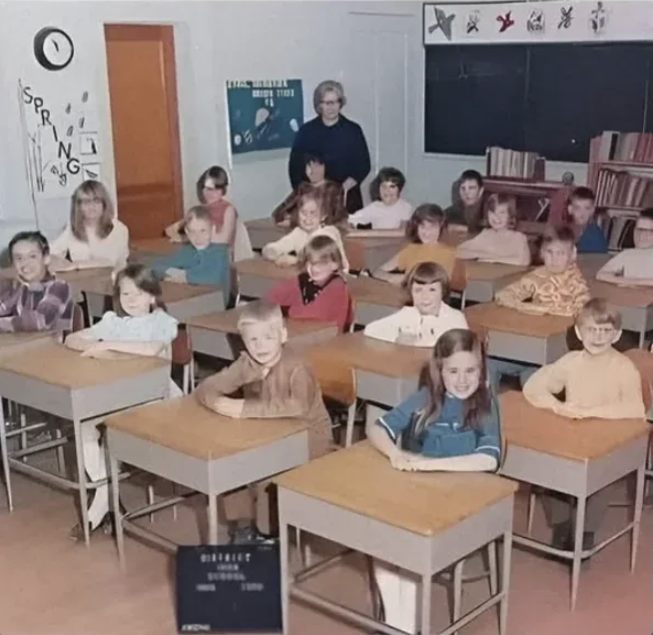
A teacher asked students to write the kindest thing about each classmate. She compiled individual lists for everyone. Simple assignment. Write something kind about every person in class. The teacher collects them, organizes them by student, and gives everyone a list of all the kind things their classmates said about them.
Smiles appeared. “I didn’t know anyone noticed me,” someone whispered. That’s the immediate impact. Students seeing that their classmates had noticed them. Had seen something kind worth writing down. Had thought about them long enough to identify something good. The lonely kid discovering he wasn’t invisible. The quiet girl learning she mattered.
Years later, Mark died in Vietnam. Decades pass. The class grows up. They scatter. They build lives. Some stay in touch, some don’t. And then Mark dies. Not in a car accident or from illness. In Vietnam. Serving his country. Killed in a war that stole so many young men.
At his funeral, his parents showed the teacher his list—worn, taped, treasured. Mark had carried it. Not kept it in a box somewhere. Carried it. With him. Through basic training. Through deployment. Through the terror and chaos of Vietnam. He carried that list of kind things his classmates had said about him.
Worn. Taped. Treasured. The paper falling apart from being unfolded and read so many times. Taped back together when it tore. Kept despite the inconvenience of carrying extra paper in a war zone. Treasured because it reminded him that people had seen him, had noticed him, had thought kind things about him worth writing down.
Then classmates revealed theirs: Charlie’s in his desk. Chuck’s in his wedding album. Vicki’s always in her purse. The assignment wasn’t just meaningful to Mark. It was meaningful to all of them. Charlie kept his in his desk—pulling it out when work was hard, when confidence flagged, when he needed reminding that people thought kindly of him. Chuck put his in his wedding album—among the most important documents of his life, proof that he was loved. Vicki carried hers always—in her purse, accessible whenever she needed the reminder.
The teacher cried, realizing her simple assignment taught them they mattered—and they never forgot. The immediate smiles were just the beginning. The real impact lasted decades. Carried through wars and weddings and ordinary days when confidence wavered. The simple act of asking students to write kind things about each other created lists that became treasures. Proof of mattering. Evidence of being seen.
A teacher asked students to write the kindest thing about each classmate. How long did that assignment take? Maybe an hour of class time. Maybe homework. Not a huge investment. Just: think about your classmates and write something kind about each one.
She compiled individual lists for everyone. The work on the teacher’s end. Taking all those submissions and organizing them so each student got a list of everything kind their classmates had written about them. Typing or writing them out neatly. Making sure everyone got their list.
Smiles appeared. That was the immediate reward. Students reading their lists and smiling. Discovering that people had noticed them. That their classmates had thought kind things. That they weren’t invisible or insignificant or merely tolerated. They were seen. And what people saw was worth writing down.
“I didn’t know anyone noticed me,” someone whispered. The quiet revelation. The lonely kid discovering he’d been seen all along. The student who felt invisible learning that people noticed him and thought kindly of him. The whisper because it was too precious to say loudly. Too vulnerable. Too overwhelming.
Years later, Mark died in Vietnam. The story jumps forward. The class graduates. Life happens. And Mark ends up in Vietnam. Ends up in combat. Ends up killed. His parents receive his belongings. And among them: a worn, taped, treasured list.
At his funeral, his parents showed the teacher his list—worn, taped, treasured. Imagine that moment. The teacher seeing that list decades after creating it. Seeing how worn it was. How many times it had been unfolded and read. How carefully it had been taped back together when it started falling apart. How much it had mattered to Mark that he’d carried it through a war.
Then classmates revealed theirs. The revelation that Mark wasn’t unique. That everyone had kept their lists. That decades later, these adults still had the pieces of paper their teacher had given them in school. Still treasured them. Still returned to them when they needed reminding that they mattered.
Charlie’s in his desk. At work, probably. In the top drawer where he can pull it out on hard days. Where he can remind himself that people thought kind things about him. That he’s seen and valued and worth knowing.
Chuck’s in his wedding album. Among the pictures of the most important day of his life. The list of kind things his classmates wrote about him preserved alongside photos of his wedding. Both pieces of evidence that he’s loved.
Vicki’s always in her purse. Carried daily. Available whenever she needs it. Whenever doubt creeps in or confidence flags or she needs reminding that people noticed her and thought kind things worth writing down.
The teacher cried, realizing her simple assignment taught them they mattered—and they never forgot. The power of that realization. That a one-hour class assignment had created lasting impact. Had given students something they carried through their entire lives. Had taught them—durably, unforgettably—that they mattered. That they were seen. That people thought kindly of them.
And they never forgot. Decades later, they still had their lists. Still treasured them. Still returned to them for comfort and reassurance. The teacher’s simple assignment became proof of mattering that lasted lifetimes.