The question started simply enough: “Have you eaten, Mrs. Luina?”
It’s the kind of question good neighbors ask — checking in, showing care, maintaining the small rituals of connection that turn proximity into community. The wife had tried a new recipe for fresh salmon, steamed with butter, using fish from a recent fishing trip. She wanted to share it with their elderly neighbor.
Mrs. Luina hadn’t eaten yet. So the couple visited her house to bring her lunch, a gesture of kindness that already spoke to the relationship they’d built with this woman who lived nearby.
They didn’t forget to bring Galdino along.
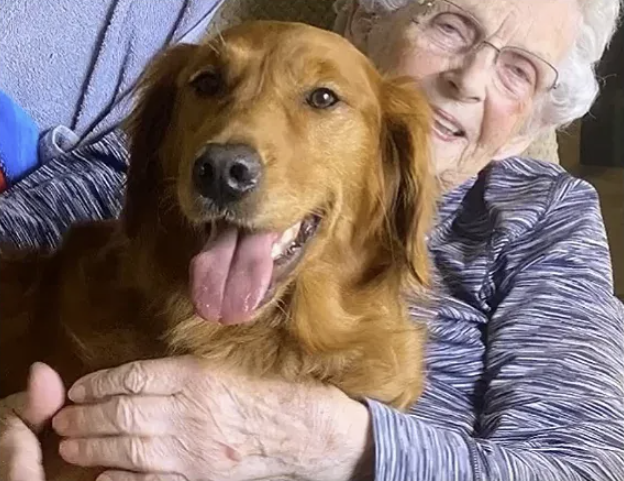
Galdino is their dog — probably a golden retriever based on the photograph, with the warm temperament and gentle presence that makes that breed beloved. He came along for the visit, perhaps as company, perhaps because they knew Mrs. Luina enjoyed his presence.
They all ate together. Not the hurried eating of people with places to be, but the communal meal of friends and neighbors, sharing food and conversation, Galdino likely positioned nearby hoping for dropped bites or offered treats.
Then, as they were about to leave, Mrs. Luina made a request that revealed something about her loneliness, her need for companionship, her recognition that Galdino offered something she desperately wanted.
She pleaded with them, asking if Galdino could stay with her for a few days.
The wife’s response was immediate: “Yes, of course, that’s fine!”
No hesitation, no calculation of inconvenience, no concern about being separated from their beloved dog. Just instant agreement because their neighbor needed something they could provide.
Hearing that answer, Mrs. Luina smiled widely. Then she said something that revealed the depth of what this gesture meant to her, and the wisdom she’d gained from years of observing marriages:
“Thank you very much for your kindness. You have such a good and kind wife. Take good care of her; don’t ever make her cry.”
She was speaking to the husband, offering advice born from experience, recognizing that a woman who immediately agrees to lend her dog to a lonely neighbor is someone special, someone worth treasuring, someone whose kindness should be protected and honored.
The photograph shows Mrs. Luina with Galdino, both of them looking content. She’s elderly, wearing glasses, her aged hand resting on Galdino’s golden fur. The dog sits close to her, comfortable and calm, already providing the companionship she needed.
The couple wrote: “We’ve become like family with Mrs. Luina; she’s such a great neighbor.”
That phrase — “like family” — captures what neighborhoods can be at their best. Not just people who happen to live near each other, but chosen family who show up with lunch, who lend their dogs for companionship, who recognize and respond to each other’s needs without resentment or calculation.
Mrs. Luina lives alone. The story doesn’t explain why — whether through widowhood or other circumstances — but her loneliness is apparent in her plea for Galdino to stay. She wanted company, warmth, the presence of a living being who wouldn’t judge or demand, who would simply exist beside her and make the house feel less empty.
The couple understood this. They didn’t treat her request as an imposition or explain why it would be inconvenient. They simply said yes, prioritizing their neighbor’s emotional wellbeing over their own attachment to their pet.
Galdino probably didn’t mind. Dogs are remarkably adaptable, especially when going somewhere means receiving extra attention and affection. For a few days, he became Mrs. Luina’s companion, sleeping in her house, keeping her company, providing the comfort that only dogs can offer.
Mrs. Luina’s advice to the husband carries weight beyond that moment. She recognized something valuable in his wife’s immediate generosity, in her willingness to lend what she loved to ease someone else’s loneliness. That kind of kindness is rare, worth protecting, worth honoring with reciprocal care.
“Don’t ever make her cry” isn’t just about avoiding conflict. It’s about recognizing that people with genuinely kind hearts deserve to be treated with equal kindness, that their generosity shouldn’t be taken for granted, that causing pain to someone who consistently offers care is a particular kind of betrayal.
They’ve become like family. Mrs. Luina is such a great neighbor. These statements work in both directions — she’s great because they’re great, they’re family because all of them have chosen to be.
Galdino came home eventually, returning to his usual life. But the bond deepened by those few days remains, the understanding that this neighbor isn’t someone they help out of obligation but someone they care for like family, someone whose loneliness matters, someone worth sharing their beloved dog with whenever she needs companionship.