They told their three-year-old granddaughter that New Year’s is special because you get to toast to a new year.
She listened with the serious attention children give to new information, absorbing this idea that certain moments require celebration, that coming together with food and raised glasses marks transitions from one year to the next.
A few hours later, her small voice rang out with urgency: “ARE WE GONNA MAKE TOAST NOW?!”
The adults probably laughed at first, charmed by the misunderstanding that turned “toast” from metaphorical celebration into literal breakfast food. But then something beautiful happened instead of just correcting her misunderstanding.
They said yes.
Thus, a New Year’s daily tradition was born in their family. Not the midnight champagne toast that adults plan, but a morning ritual created by a three-year-old who took them literally and gave them something better than what they’d originally meant.
They always make toast every morning before going to work and school. Not elaborate breakfasts or complicated preparations, just toast — simple, achievable, requiring only bread and heat and a few minutes of standing together before everyone scatters to their separate responsibilities.
The tradition has brought many other family members closer to them because of this good little habit. Extended family joins when they visit. Distant relatives make time to participate when they’re in town. What started as one child’s misunderstanding became the gravitational center that pulls everyone together, the daily reminder that family matters more than rushing out the door.
She’s the little hero who united their whole family. Not through grand gestures or planned interventions, but through innocent enthusiasm about toast — through taking adults at their word and insisting that celebration shouldn’t wait for special occasions.
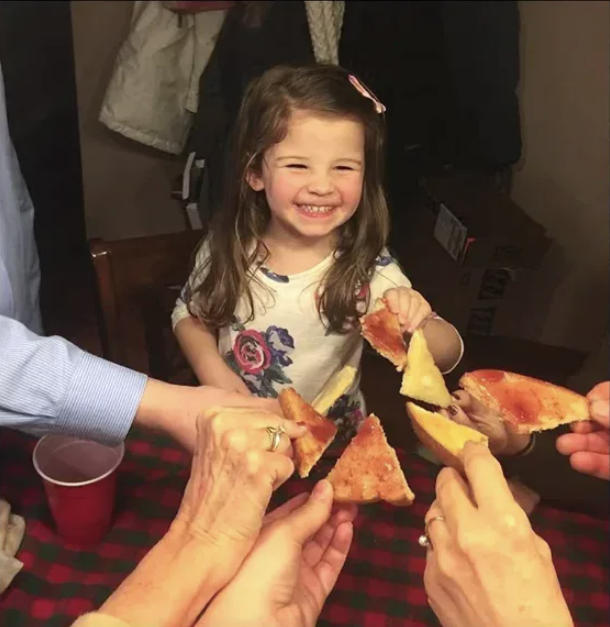
The photograph captures her beaming with joy, holding up a slice of toast while multiple hands reach toward her from all directions, each person holding their own piece of bread in a morning toast ritual. Her smile is pure delight, the happiness of someone who knows she created something important, even if she’s too young to articulate exactly what.
She deserved love, and she received it — not despite her misunderstanding, but because of it. Her family could have dismissed her question, explained that “toast” meant something different, waited until next New Year’s to properly educate her about traditions.
Instead, they honored her interpretation. They made it real. They let a three-year-old define how their family celebrates transitions, and in doing so, they discovered something more valuable than the tradition they’d originally planned to teach her.
Morning toast before work and school creates connection that midnight champagne never could. It’s daily rather than annual, accessible rather than formal, inclusive of children rather than adult-focused. It happens when everyone’s rushed and tired, when carving out even five minutes feels difficult — which makes it more meaningful, not less.
The little girl probably doesn’t remember the New Year’s conversation that started this tradition. But she knows that every morning, her family stops rushing long enough to stand together holding toast, to say something grateful or hopeful or silly, to acknowledge each other before the day pulls them apart.
That knowledge shapes how she understands family. Not as people who happen to share a home, but as people who choose daily connection, who prioritize small rituals, who let a three-year-old’s enthusiasm reshape their routines.
Other family members join because the tradition carries meaning beyond breakfast food. It represents willingness to listen to children, flexibility to adapt plans, commitment to daily connection regardless of how busy life becomes. It’s a visible demonstration that this family values presence, even when it’s inconvenient.
Years from now, when the little girl is grown, she’ll know that she united her family. That her innocent question created something that outlasted childhood, that continues bringing people together long after she understood the difference between toasting with bread and toasting with words.
She’s the little hero who proved that sometimes the best traditions aren’t the ones we inherit, but the ones we create by accident when we take children seriously and let their enthusiasm reshape our lives.