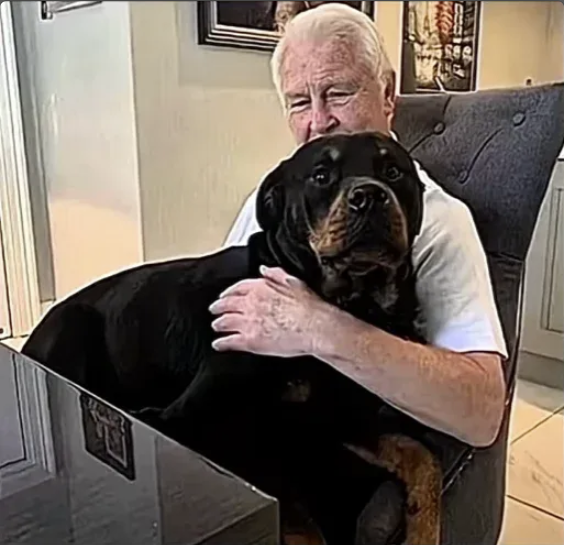
The son had been gone for a week. When he came home, his Rottweiler wouldn’t leave his father’s side. Wouldn’t even look at him. The dog stayed glued to the old man, as if the son no longer existed.
The father looked his son in the eyes and said something that would change everything: This isn’t your dog anymore. You don’t own a dog. You take care of one.
The son tried to argue. Tried to explain. But his father pushed harder, driving the lesson home with the kind of honesty that only comes from watching someone fail at something fundamental. The Rottweiler had made his choice. And that choice said everything about how the son had been treating him.
Two days later, the son came back. Early. Tears streaming down his face. Apologies spilling out between sobs. Begging his father to let him have his dog back. And then, something remarkable happened—he pulled the Rottweiler close and hugged him with a desperation that spoke of real understanding.
The father didn’t take the dog. He gave his son a lesson. Dogs aren’t possessions. They’re not things you own and forget about. They’re living beings who remember how you treat them, who feel your absence, who bond with whoever shows up consistently with love and care.
The Rottweiler’s refusal to acknowledge his son wasn’t spite. It was self-preservation. It was a broken trust that needed rebuilding. It was a dog saying: you left, and someone else was here. You don’t get to just come back and expect everything to be the same.
But the beautiful thing—the thing that makes this story worth telling—is that the son learned. He came back humbled. He came back understanding that love isn’t ownership. That loyalty is earned, not assumed. That dogs aren’t accessories to your life—they’re family members who deserve your presence, your attention, your commitment.
The father could have just given the dog back. Could have said fine, take him, he’s yours. But he didn’t. He made his son understand what it means to truly care for another living being. To show up. To be present. To earn back trust that was lost.
Now, when the son holds his Rottweiler, he holds him differently. Not as property, but as family. Not with entitlement, but with gratitude. Not assuming the dog will always be there, but cherishing every moment they have together.
Dogs aren’t pets. They’re family. And if that truth resonates with you—if you’ve ever loved a dog and understood that they’re not something you own but someone you care for—then this story is for you.
The Rottweiler is back with his son now. But not because the son demanded it. Because he earned it. And that makes all the difference.