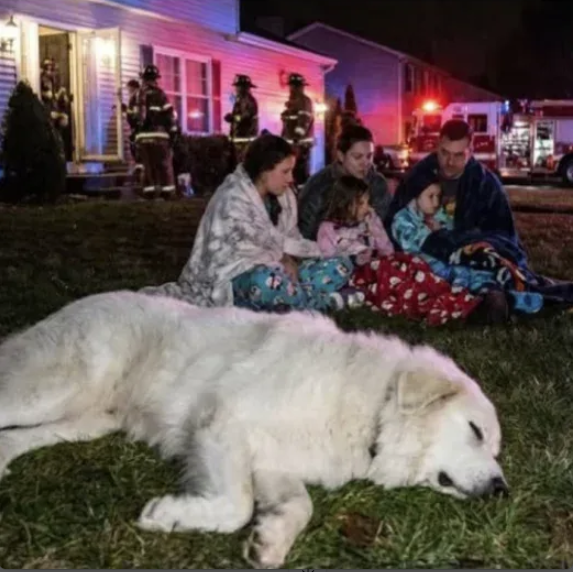
Bear slept twenty hours a day. A Great Pyrenees who lived up to his name in size but seemed to have missed the memo about what guard dogs are supposed to do. The Millers joked that he was the worst guard dog in history—content to sleep through doorbells, ignore strangers at the fence, snore through delivery trucks and neighborhood commotion.
Mr. Miller would stand at the window watching Bear sprawled in the yard, completely oblivious to the mailman walking past, and shake his head with affection and mild exasperation. They’d gotten a guard dog breed specifically for protection, and what they got was a massive white dog who seemed to believe his only job was napping in progressively sunnier spots throughout the day.
But then came the night at 2 AM when everything changed.
Mr. Miller was dizzy, disoriented, somewhere between sleep and wakefulness when suddenly Bear was on their bed—all one hundred and twenty pounds of him, barking frantically, pulling at Mr. Miller’s sleeve with enough force to demand attention. Not the casual interest of a dog who wants breakfast, but desperate, urgent communication that something was catastrophically wrong.
Mr. Miller’s brain was foggy, struggling to understand why Bear was acting like this, why the room felt strange, why thinking was so hard. But Bear wouldn’t stop. He barked and pulled and nudged until Mr. Miller finally, groggily, understood: carbon monoxide poisoning.
The realization hit with the clarity that comes right before consciousness fails completely. Their heating system must have malfunctioned, filling the house with the odorless, invisible killer that’s claimed so many families in their sleep. Another hour and they’d all be dead—Mr. and Mrs. Miller and their three children, poisoned by something they couldn’t see or smell or fight against.
But Bear knew. Somehow, through canine senses humans don’t fully understand, he detected the danger. And the dog who’d slept through everything suddenly became a whirlwind of action.
He raced between rooms, barking at the children’s doors, nudging them awake with his massive head. The kids stumbled out of bed confused and half-asleep, not understanding the urgency but responding to Bear’s frantic energy. He herded them toward the door like livestock, his body language making it clear they needed to move now, to get out, that staying inside meant death.
They stumbled outside just in time—before carbon monoxide levels reached lethal concentrations, before their already-compromised bodies shut down completely. The family stood on their lawn in pajamas, dizzy and nauseous but alive, watching fire trucks and emergency responders arrive, watching their home get ventilated and the faulty heating system identified as the source of the gas that had been killing them.
Later, when Mr. Miller could think clearly again, when the crisis had passed and his family was safe and he could finally process what had happened, he looked at Bear and understood something profound. The dog wasn’t lazy. He wasn’t a failure as a guard dog. He’d been conserving his energy for the one moment that truly mattered.
The photograph shows the aftermath—emergency vehicles with lights flashing, the house illuminated behind them, Bear lying exhausted on the lawn in the foreground while the Miller family sits together wrapped in blankets, the three children in their pajamas looking dazed but safe. Bear’s white fur glows in the emergency lights, his body finally at rest after the most important work of his life.
Mr. Miller cried against Bear’s fur, understanding now what he’d misjudged. All those hours of sleep weren’t laziness—they were preparation. All that ignoring of doorbells and delivery trucks wasn’t failure—it was discernment. Bear had known, somehow, that most disturbances don’t matter. That barking at everything is exhausting and pointless. That a real guard dog saves his energy for genuine threats.
And when a genuine threat came—silent and invisible and deadly—Bear was ready. Not tired from barking at every passing car, not worn out from reacting to every doorbell. Rested and alert enough to detect danger that would have killed the family he loved, and energetic enough to wake them all and herd them to safety.
Great Pyrenees were bred to protect livestock, to lie calmly in fields watching for predators, to differentiate between threats and normal activity. They’re not aggressive barkers or constant sentries. They’re discerning guardians who understand that real protection isn’t about reacting to everything—it’s about identifying actual danger and responding with everything you have.
Bear embodied his breed perfectly. He just did it in ways the Millers hadn’t recognized until the night it saved their lives.
The worst guard dog in history turned out to be the best guard dog possible—one who understood that sleeping twenty hours a day meant having energy for the one crisis that required it. Who didn’t waste his attention on meaningless disturbances but stayed alert for real threats. Who knew the difference between a doorbell and a death sentence, and responded accordingly.
The Millers will never joke about Bear being lazy again. They’ll watch him sleep in sunny patches and feel grateful that he’s resting, that he’s conserving energy, that when the next crisis comes—hopefully never, but possibly—he’ll be ready again to do what he did that night at 2 AM.
He saved them all. Three children who’ll grow up because a dog they thought was useless turned out to understand protection in ways they’d completely misjudged. Parents who’ll live to see their children grow because a dog they’d lovingly mocked as the worst guard dog in history was actually perfect at his job—just waiting for the one moment when his job truly mattered.
Bear sleeps twenty hours a day still. But now when the Millers see him sprawled and snoring, ignoring doorbells and delivery trucks, they understand. He’s not lazy. He’s ready. Ready for the next invisible threat, the next silent danger, the next moment when everyone he loves needs him to be fully alert and energetic and willing to pull them from sleep into safety.
The worst guard dog in history. That’s what they called him. Until the night he proved that the best protection comes from those who save their strength for when it truly matters. Who don’t exhaust themselves on meaningless alerts but stay ready for real danger. Who understand that love sometimes looks like sleeping in the sun—until the moment it looks like frantically barking at 2 AM and refusing to stop until everyone you love is safe.