After a weak tornado scraped across a rural Kentucky ridge, farmer Dale Morgan walked his property checking fences and downed limbs. The kind of post-storm assessment farmers do—looking for damage, evaluating what needs repair, making mental lists of tomorrow’s work.
At the far end of the lane, he saw his neighbors’ house dark. Their power line snapped and lying in the ditch. No lights. No electricity. No way to run appliances or keep food cold or have any of the basic necessities that require power.
Dale didn’t call to ask if they needed help. Didn’t wait to see if the power company would come quickly. He just acted.
He hauled his portable generator over on a small trailer. Ran a heavy extension cord to their porch. And then he did something crucial—he showed them how to rotate appliances so nothing overloaded. Because a portable generator has limited capacity, and if you try to run everything at once, you’ll blow the circuit and have nothing.
That night, their fridge hummed again. A single lamp glowed through the window. Not full power. Not everything running simultaneously. But enough. Enough to keep food from spoiling. Enough to have light. Enough to not feel completely isolated in the dark after a storm.
Dale headed home quietly, boots muddy from the walk back through post-storm terrain. Didn’t announce what he’d done. Didn’t expect thanks or recognition. Just saw neighbors without power and shared the resources he had.
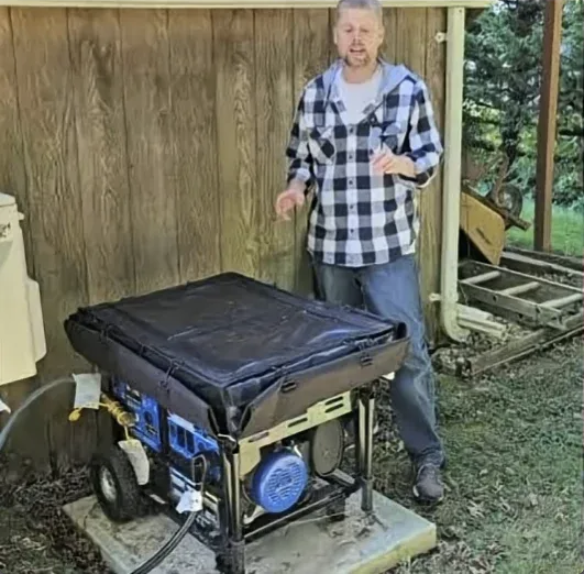
The photo shows Dale standing beside his portable generator—a sturdy, practical piece of equipment that farmers keep for emergencies. He’s wearing a plaid shirt, looking comfortable and unremarkable. Just a farmer who did what seemed obvious to him: neighbors needed power, he had a generator, so he shared it.
In rural communities, this kind of mutual aid used to be standard. Before power companies had extensive infrastructure, before emergency services could reach every location quickly, people relied on each other. If your neighbor’s barn caught fire, everyone came to fight it. If someone’s crop failed, others shared. If a storm took out power, someone with a generator brought it over.
That ethic has faded in many places. We’ve become more isolated, more dependent on systems and services, less connected to the people living closest to us. We call companies instead of neighbors. We wait for official help instead of providing informal assistance.
But Dale still operates on the old model. The model where if you have something and your neighbor needs it, you share. No paperwork. No formal agreement. Just the understanding that we’re all living on this ridge together, and when storms come, we take care of each other.
Running a heavy extension cord to someone’s porch isn’t dramatic. Teaching them to rotate appliances isn’t heroic. But it’s practical, effective help that made immediate difference in his neighbors’ ability to function after the tornado.
They probably couldn’t afford a hotel. Probably couldn’t easily evacuate. Probably were facing days or weeks without power until the utility company could repair the snapped line and restore service. Dale’s generator gave them a bridge—not full normalcy, but enough functionality to stay in their home instead of being displaced by lack of electricity.
The fridge humming again meant food wouldn’t spoil. For people on tight budgets, that’s significant. Losing a refrigerator full of groceries because of storm damage is a real economic hit—one that Dale’s generator prevented.
The single lamp glowing through the window meant they had light after dark. Could read. Could see where they were going. Could maintain some sense of normalcy instead of sitting in complete darkness for hours each evening.
These seem like small things until you don’t have them. Until you’re the one sitting in a dark house with food spoiling and no way to run any appliances. Then a generator becomes lifesaving equipment, and the neighbor who brings it over becomes the reason you can stay in your home instead of evacuating.
Dale didn’t need thanks. Didn’t need recognition. Just needed to see that lamp glowing through his neighbors’ window, evidence that what he’d done worked, that they had at least basic power until the utility company restored their regular service.
He headed home quietly. Boots muddy. Generator with the neighbors. Job done.
That’s what community looks like in rural areas when it’s working right. Not formal programs or official assistance. Just people who notice when neighbors need help and provide it with whatever resources they have available.
Dale had a generator. His neighbors needed power. So he brought the generator over, showed them how to use it safely, and went home. Simple. Practical. Effective.
The tornado took out their power line. But Dale made sure they weren’t sitting in darkness. Made sure their food stayed cold. Made sure they could function until regular power returned.
That’s not charity. That’s not even exceptional kindness. That’s just neighboring. The kind that used to be common and is now rare enough to be remarkable.
But on a rural Kentucky ridge, after a tornado snapped a power line, Dale Morgan still practices it. Still sees neighbors in need and shares what he has.
A single lamp glowed through the window that night. And a farmer walked home quietly through muddy paths, satisfied that he’d done what needed doing.
That’s community. The real kind. The kind that doesn’t wait for systems or services. The kind that just sees a need and fills it.
One generator. One extension cord. One farmer who understood that if you have something and your neighbor needs it, you share.
Simple as that.