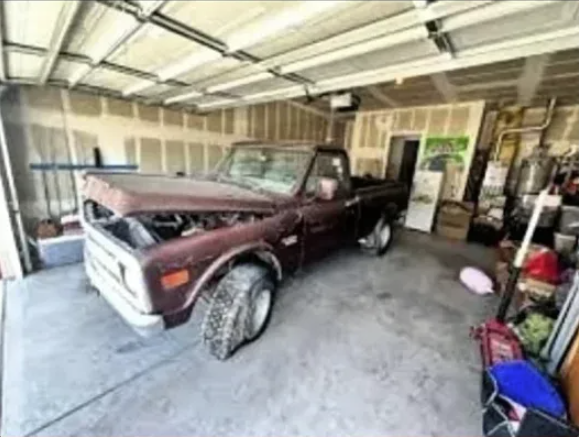
At a small shop outside Abilene, seventeen-year-old Carter Hill rolled in his grandfather’s 1974 Chevy that hadn’t run since spring. The truck was old, worn, sitting idle for months—the kind of project that would require significant mechanical work and probably cost more than a teenager could afford.
Carter came prepared. He had careful notes. He had a photo of his grandfather tucked in the visor—a reminder of why this mattered, why this particular truck needed to run again. He probably expected to get an estimate, maybe some timeline for when the work could be done, maybe a payment plan if he was lucky.
The mechanic, Ron Tate, noticed the notes. Noticed the photo in the visor. Noticed that this wasn’t just a broken truck—it was a connection to someone important. A grandfather’s vehicle that a grandson was trying to restore.
Ron could have done what most mechanics do: provided an estimate, scheduled the work, charged shop rates, fixed the truck professionally and efficiently. That would have been the normal, expected, reasonable approach.
Instead, Ron spent evenings showing Carter how to do it himself. How to clean the carburetor. How to replace brittle hoses. How to sand the fenders by hand. Not as an employee. Not on the clock. Just as someone who recognized that this seventeen-year-old needed more than a fixed truck—he needed to understand what he was driving.
After two weeks of work, the engine finally turned over with a steady rumble. That sound—the sound of an engine coming back to life after months of silence—is one of the most satisfying sounds in automotive work. Evidence that all the hours, all the adjustments, all the problem-solving resulted in something that actually works.
Carter sat in the driver’s seat a moment longer than needed. Not checking anything. Not adjusting anything. Just sitting there, letting the sound settle into the quiet bay. Feeling the rumble through the steering wheel. Experiencing the moment when a project becomes reality.
That moment mattered. Not just because the truck worked, but because Carter had made it work. Under Ron’s guidance, with his own hands, he’d brought his grandfather’s truck back to life.
Ron didn’t charge shop rates for those two weeks of evening instruction. Didn’t bill for his time or expertise. He gave Carter something more valuable than a fixed truck—he gave him knowledge, competence, and the confidence that comes from understanding how something works instead of just paying someone else to make it work.
This story matters because it represents something increasingly rare: mentorship that isn’t transactional. Ron could have earned more money by just doing the work himself. Would have finished faster. Would have had more predictable results. Would have been easier in every measurable way.
But he chose to teach instead. Chose to invest evening after evening showing a teenager how to work on a truck. Chose to give Carter skills that will serve him for the rest of his life—not just with this truck, but with every vehicle he owns, every mechanical problem he encounters, every moment when understanding how something works becomes valuable.
Carter came to that shop with a broken truck and a photo of his grandfather. He left with a working truck, mechanical knowledge, and the experience of being mentored by someone who cared more about his education than about profit.
The photo shows the 1974 Chevy sitting in Ron’s bay—old, burgundy, clearly a project vehicle but now functional. The kind of truck that represents more than transportation. It represents connection to a grandfather, to a generation that built things to last, to a time when vehicles were simpler and more repairable.
Ron understood that. Understood that teaching Carter to fix this truck was giving him something that extended beyond the immediate problem. Was giving him connection to his grandfather through the vehicle. Was giving him self-sufficiency. Was giving him the satisfaction of having restored something with his own hands.
Years from now, when Carter is driving that truck or working on other vehicles or teaching his own kids mechanical skills, he’ll remember Ron. The mechanic who spent two weeks teaching instead of just charging. Who saw a seventeen-year-old with careful notes and a photo in the visor and decided that this was an opportunity to mentor, not just an opportunity to profit.
That’s not just good business ethics. That’s character. That’s the choice to prioritize education over efficiency, to value someone’s growth over your own convenience, to recognize that sometimes the most valuable thing you can give someone isn’t a service—it’s knowledge.
Carter sat in that driver’s seat letting the sound of the engine settle into the quiet bay. And in doing so, he was experiencing something profound: the satisfaction of having brought something back to life through his own effort, guided by someone who cared enough to teach.
Ron Tate didn’t just fix a truck. He mentored a young man. Taught him skills he’ll use forever. Gave him the experience of restoring his grandfather’s vehicle with his own hands.
That’s worth more than any shop rate. That’s the kind of generosity that changes lives.
A 1974 Chevy that hadn’t run since spring is now running. Because a seventeen-year-old cared enough to try. And because a mechanic cared enough to teach instead of just doing the work himself.
That’s not just automotive repair. That’s investing in the next generation. That’s what mentorship looks like when it’s done right.