The freezer mystery had been going on for days. Every morning, Mom would check the garage freezer only to find another fish missing. No signs of a break-in, no evidence of an animal getting inside. Just fish, disappearing one by one, as if they’d grown legs and walked away.
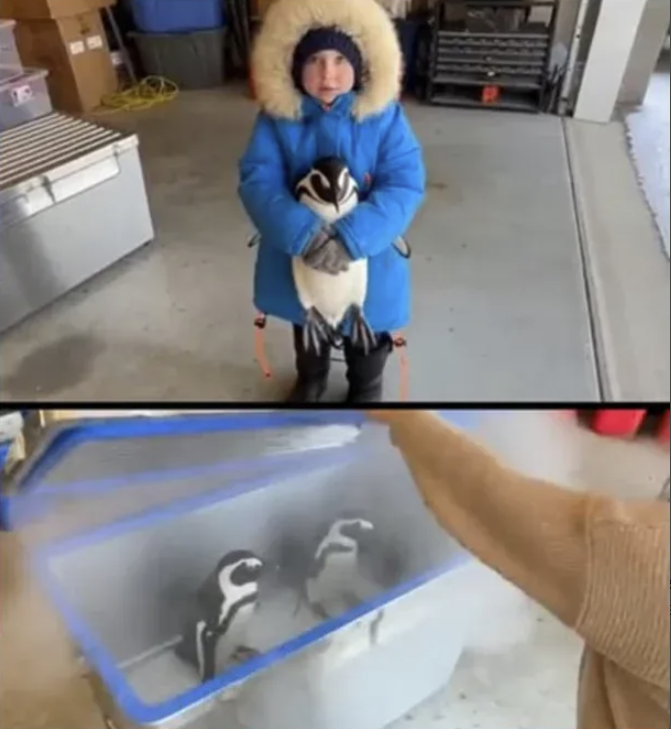
She checked the locks. She asked the neighbors. She even wondered if she was losing her mind, miscounting what she’d stored. Nothing made sense until the afternoon her daughter walked into the garage, bundled in her enormous blue winter coat, carefully cradling something against her chest.
A penguin. A live, waddling, very content penguin.
Mom stood there, frozen—not from the cold, but from the sheer absurdity of what she was seeing. Her daughter looked up with the kind of innocent pride that only children possess when they’ve done something they’re absolutely certain is wonderful.
“They like the cold box,” she explained matter-of-factly, as if penguins in the patio cooler were the most natural thing in the world. “And they come back to play with me.”
The full picture emerged slowly. Her daughter had discovered the penguins—likely from a nearby wildlife area—and had taken it upon herself to make them feel welcome. The freezer fish weren’t disappearing. They were being carefully relocated, one by one, to feed her new friends. The patio cooler had been transformed into what she described as their private clubhouse, a place where penguins could stay cool and comfortable while waiting for their daily playdate.
When Mom asked what exactly she’d been doing, the girl’s answer was pure childhood logic: “They like the cold box, and they come back to play with me.” In her mind, she’d solved a problem. The penguins needed fish and a cool place to rest. She had both. Friendship established.
Wildlife rescuers arrived to return the penguins to their proper colony, but they couldn’t help smiling at the elaborate care the girl had shown. She’d fed them, kept them cool, and genuinely believed she was helping. Her heart was in exactly the right place, even if her methods needed some adjustment.
Now the rescuers make supervised visits, bringing the little fish thief along to see her penguin friends in their natural habitat. She still talks about them like they’re her personal guests, asking if they remember her, wondering if they miss the cold box.
What started as a freezer mystery became a story about a child’s enormous capacity for love—the kind that sees a wild animal and thinks not about possession, but about friendship. The kind that sacrifices her family’s dinner fish because someone else might be hungry. The kind that builds clubhouses in coolers because everyone deserves a comfortable place to rest.
She may have been technically stealing fish and harboring wildlife. But really, she was just doing what children do best: loving without boundaries, caring without conditions, and believing that the world is made better when we make room for others—even if they waddle and prefer their fish frozen.
The penguins are back where they belong now. But somewhere in that little girl’s heart, there’s a cooler that’s still waiting, just in case her friends ever need a place to play again.