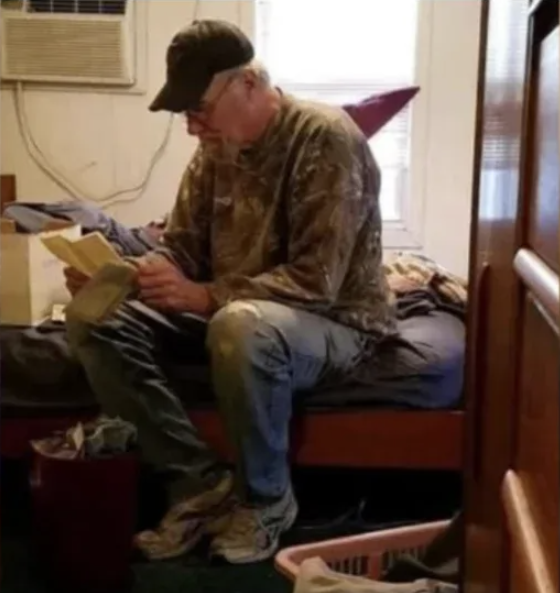
His dad discovered letters he’d written to his mother while serving in Vietnam in January 1968—letters he hadn’t seen since mailing them home 57 years ago. They’d been stored somewhere, forgotten or overlooked, gathering dust while decades passed. Now they’d surfaced, and his elderly father sat holding words written by his younger self from another lifetime entirely.
He sat with them for nearly an hour, opening each one slowly. Reading line after line like stepping back into another lifetime. Not rushing. Not summarizing or skimming. Just reading carefully, thoroughly, the way you do when encountering something sacred.
He barely spoke. Just sat there taking it in, remembering things he’d lived through as a young soldier. The fear and exhaustion and brotherhood. The heat and danger and routine. The person he’d been before war and after, connected now through these fragile papers that had somehow survived 57 years.
To his child watching, this veteran reconnecting with his own words from that time felt sacred. Not just interesting or nostalgic, but holy—the kind of moment that demands reverence. Like watching someone find a piece of their history that had been lost and finally receiving it back.
It was like a piece of his history returning to him, and him finally receiving it.
Those letters represented more than just words on paper. They held the voice of a young soldier writing home to his mother from a war zone. They contained thoughts and feelings and experiences that shaped who he’d become. They were evidence of survival—proof that the boy who wrote those letters had made it home, had lived decades beyond Vietnam, had become a father and grandfather who now sat reading his own younger voice.
Vietnam veterans carry their war differently than veterans of other conflicts. They came home to protests instead of parades. Faced judgment instead of gratitude. Many buried their experiences, didn’t talk about them, moved forward by leaving the past behind. These letters might have contained things he’d never spoken about, feelings he’d never processed, moments he’d chosen to forget.
Now, 57 years later, he sat with them again. Reading his own words. Remembering his own experiences. Reconnecting with the soldier he’d been before time and distance turned him into the veteran he became.
His child watched, understanding this was sacred. That these weren’t just old letters but a portal to another version of his father—young, scared, brave, human. That watching him read them wasn’t just witnessing nostalgia but something deeper: a man encountering his own history and finally, fully receiving it.
Some veterans never get this. Their letters are lost or destroyed. Their words from wartime disappear with the people who received them. They carry their experiences privately, with no external record, no tangible connection to who they were during those defining months or years.
But this veteran got his letters back. Got to read his own voice from 1968. Got to remember what he was thinking and feeling and experiencing. Got to reconnect with the young soldier he’d been, and perhaps to finally integrate that version of himself with the person he’d become.
His child didn’t interrupt. Didn’t ask questions or try to make conversation. Just watched, recognizing that some moments require silent witness. That watching your father reconnect with his own wartime words is a privilege that demands respect. That sometimes love looks like sitting quietly while someone processes their own history.
The letters will stay with the family now. Physical proof of service and survival. Tangible connection to a young soldier who wrote home from Vietnam and lived long enough to read his own words again 57 years later. Evidence that history isn’t just dates and events but individual voices, individual experiences, individual human beings trying to communicate across distance and danger.
A piece of his history returned to him. And he finally received it—not just the papers, but the reconnection with his younger self, the acknowledgment of what he’d lived through, the opportunity to remember and integrate and honor the soldier he’d been.