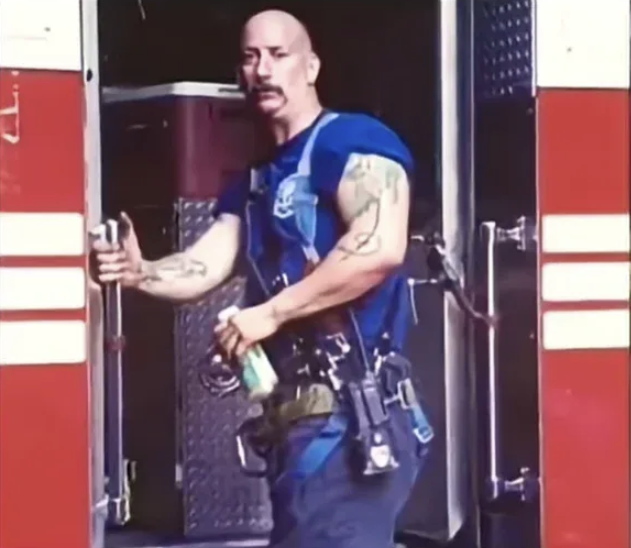
On September 11, 2001, FDNY firefighter David Weiss of Rescue 1 was on the 30th floor of the North Tower when the Mayday evacuation order came. The building was collapsing. Everyone needed to get out immediately. Survival meant going down—fast, without hesitation, without looking back.
But David Weiss knew people were trapped above him.
He could have turned back. Could have followed the evacuation order that was designed to save firefighters’ lives. Could have justified descent as following protocol, as choosing survival, as making the rational decision that you can’t help anyone if you’re dead.
Instead, he refused to turn back. And he pressed upward into certain death.
Not because he didn’t understand the danger. Not because he thought he could survive. But because people were trapped above, and leaving them to die alone was not something David Weiss could do. So he climbed while others evacuated. Moved toward death while others ran from it. Chose duty over survival in the most literal, devastating way possible.
His final act became a haunting symbol of duty and sacrifice. Of the choice firefighters make when they take the oath—to protect lives even at the cost of their own. Of the impossible courage it takes to climb toward collapse when every instinct screams to run.
David Weiss died on the 30th floor or somewhere above it, along with the people he refused to abandon. His body was eventually recovered from the ruins, but his choice—to press upward when the Mayday sounded—lives permanently in the collective memory of 9/11.
We say “never forget,” but we often forget the specific choices that defined that day. The individual moments when firefighters decided that saving strangers mattered more than saving themselves. When duty overrode survival instinct. When ordinary people became heroes by making choices most of us can’t even comprehend.
David Weiss made that choice. On the 30th floor of a collapsing tower, with the evacuation order sounding, with every rational reason to turn back, he pressed upward. Because people were trapped. Because he was a firefighter. Because that’s what the job required, and he wouldn’t abandon it even when survival depended on it.
Three hundred forty-three firefighters died on 9/11. Each one made similar choices—to run into buildings while everyone else ran out, to climb while others evacuated, to stay when leaving meant living. David Weiss’s story is one among hundreds, but each individual story matters. Each name represents a person who chose duty over survival.
His family lost him that day. His firehouse lost a brother. The city lost a hero. But the world gained a permanent reminder of what real courage looks like—not the absence of fear, but the choice to act despite it. Not ignorance of danger, but full awareness of death and the decision to press forward anyway.
David Weiss’s final act remains a haunting symbol. Of duty that supersedes self-preservation. Of sacrifice that gives everything. Of the choice to climb when you could descend, to stay when you could leave, to die protecting strangers because that’s what heroes do.
We build memorials. We observe moments of silence. We say “never forget.” But the best way to honor David Weiss and the 342 other firefighters who died that day is to remember their specific choices. To know their names. To understand that heroism isn’t abstract—it’s individual people making impossible decisions in the worst moments imaginable.
David Weiss pressed upward into certain death because people needed him. That choice defines him. Honors him. And reminds us all that some people, when faced with the ultimate test, choose others over themselves every single time.