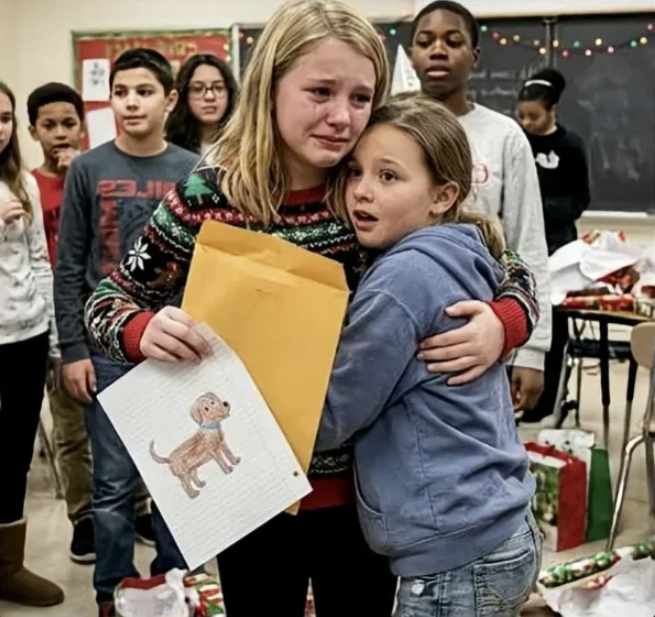
At twelve years old, living in a shelter with no lunch money, she pulled “Sarah” for Secret Santa—the most popular, wealthiest girl in school. The kind of girl who had everything, who wore name brands and carried the latest phone, who moved through school hallways with the confidence that comes from never worrying about money or belonging or whether you’ll have lunch that day.
The other kids would exchange toys and gift cards. Things purchased from stores with allowances and birthday money. Things that proved you belonged, that you had resources, that you were normal.
She had none of that. No allowance. No birthday money. No ability to walk into a store and buy something impressive. She lived in a shelter where every day was about survival, not celebration. Where having enough to eat mattered more than having things to give.
But she had a pencil. And paper. And a heart that understood something most twelve-year-olds haven’t learned yet: that the best gifts aren’t always the ones you can buy.
So she drew Sarah’s dog. Carefully, with the kind of attention that comes from wanting desperately to get something right. She wrote a poem about Sarah’s kindness—because even popular, wealthy girls can be kind, and maybe especially because this girl had noticed when others might not have. She put both in an envelope and prepared to hand over a gift she was certain would be mocked.
On party day, kids exchanged their purchased presents. Squeals of delight over new toys. Thanks for gift cards. The ritual performance of gratitude for things that came from stores and would eventually be forgotten or broken or replaced.
Then she handed Sarah the envelope. Shaking. Waiting for the laughter she was sure would come. Waiting for the moment when everyone would see how little she had to offer, how far she was from belonging in this world of kids with lunch money and wrapped presents.
Instead, Sarah’s eyes filled with tears.
She opened the envelope slowly, pulled out the drawing of her dog—rendered in pencil with careful detail and obvious love. She read the poem about her kindness, words chosen thoughtfully, written by someone who’d noticed when Sarah had been kind even when it wasn’t noticed by others.
And then Sarah did something that silenced the entire classroom. She hugged her. Tightly. In front of everyone. And announced through tears: “This is the best gift. Everyone bought things I can buy myself. You made this.”
She kept it on her binder all year. That drawing and poem became more precious than any purchased gift she’d received. She carried it through hallways, displayed it proudly, treated it like the treasure it was. And in doing so, she taught everyone watching that heart matters most.
That moment changed something for the twelve-year-old girl from the shelter. Not her circumstances—she still went home to a shelter, still had no lunch money, still lived with the daily anxiety of poverty. But she learned that what she had to offer mattered. That creativity and thoughtfulness and care could be as valuable as money. That making something for someone could mean more than buying something for them.
Sarah understood what many adults never learn: that the most meaningful gifts are the ones that required personal investment. Time. Thought. Heart. The drawing of her dog wasn’t just an image—it was proof that someone had paid attention to what she loved. The poem wasn’t just words—it was evidence that someone had noticed her kindness and valued it enough to honor it in writing.
Years later, both girls probably remember that Secret Santa exchange. Sarah remembers the surprise of receiving something made specifically for her, something unique that no amount of money could duplicate. The other girl remembers learning that her gifts—her creativity, her attention, her heart—were enough. More than enough. Exactly what someone needed.
We teach children that value comes from price tags. That gifts should be purchased, that spending money proves you care, that the best presents come from stores. But sometimes the most precious gifts are the ones made with shaking hands by twelve-year-olds who have nothing to give except everything that matters.
A drawing of a dog. A poem about kindness. Given from shelter poverty to suburban wealth. Received with tears of gratitude instead of dismissive laughter. Kept on a binder all year as a reminder that heart matters most.