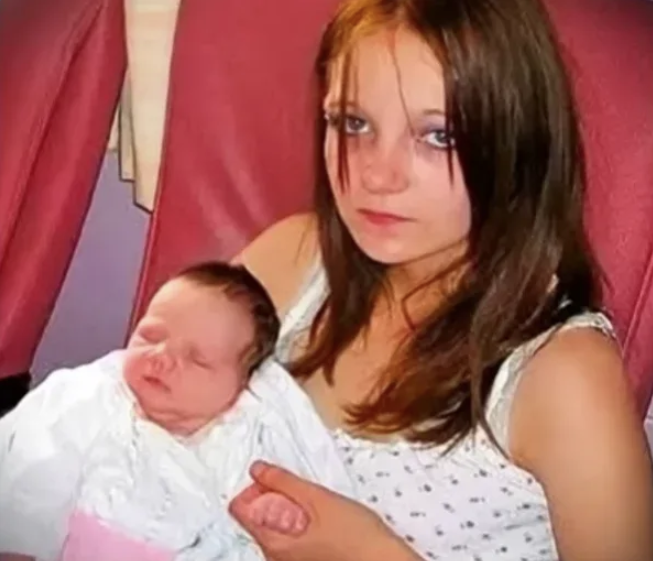
She was twelve years old and already raising herself. Her mother was lost to alcohol—not physically absent, but mentally and emotionally gone, incapable of providing the most basic care. Her father had left long ago, disappearing into whatever life people build when they abandon their children. She’d learned to cook her own meals, get herself to school, navigate a world that should have had adults guiding her but instead left her to figure everything out alone.
Twelve years old and already understanding that survival was her responsibility.
Then someone left a baby in their hallway.
She heard the crying first—weak, desperate, the sound of an infant who’d been alone too long. She opened the door and found him there, burning with fever, wrapped in a dirty blanket, abandoned like trash someone couldn’t be bothered to dispose of properly.
He’s my brother, she whispered when she picked him up. She didn’t know that for certain. Didn’t have DNA tests or birth certificates or any proof. But she knew in the way children know things—in the bone-deep recognition that this baby had been left in her hallway specifically, that someone had chosen this door, this building, this child to receive him.
Her mother didn’t notice. Wouldn’t have cared if she had noticed. The twelve-year-old girl understood immediately that if she didn’t do something, the baby would die.
So she carried him to the hospital.
A twelve-year-old child walking through streets carrying an infant burning with fever, heading toward help because no adult in her life would provide it. She held him carefully, instinctively knowing to support his head even though no one had taught her. She whispered to him, promising things she had no power to guarantee—It’s okay, we’re going to get help, you’re safe now.
She walked into the emergency room clutching him, and everyone stopped. Because this wasn’t a mother with her child. This was a child with a child—a little girl in clothes too old for her age, carrying a baby who clearly wasn’t hers, both of them representing everything broken about systems that should protect children but instead abandon them.
He’s my brother, she said again when they asked. Someone left him in our hallway. Her mother was lost to alcohol, her father long gone—she’d been raising herself for years. And yet, in that moment, she chose to save a child who wasn’t even hers.
The hospital staff moved quickly. They treated the baby’s fever, checked for injuries, started asking questions about who left him and why. Social workers arrived. Police were called. The machinery of child protection—flawed and overwhelmed though it is—finally kicked into gear.
But none of it would have happened without her. Without a twelve-year-old girl who carried more responsibility in her small hands than most adults ever do. Who looked at an abandoned baby and didn’t walk away, didn’t call for help she knew wouldn’t come, didn’t leave him for someone else to find. Who picked him up and carried him toward safety even though she herself had no safety, no support, no adults protecting her.
The baby lived because she made a choice.
Not because she had resources or training or a stable home. Not because the systems designed to help children actually helped. Not because any adult in her life stepped up. The baby lived because a little girl who’d been abandoned herself decided that no one else would be left alone if she could help it.
We talk about heroes as if they’re always adults with power and resources. Police officers and firefighters, doctors and soldiers, people with training and authority who make split-second decisions that save lives. And those people are heroes. Their courage matters. Their sacrifices count.
But sometimes the bravest heroes come wrapped in the tiniest hearts. Sometimes they’re twelve-year-old girls who’ve already been failed by every adult in their lives but still choose to show up for someone more vulnerable than themselves. Sometimes they carry babies through streets toward hospitals because it’s the right thing to do, even when no one taught them what right looks like.
That girl saved her brother’s life. But more than that, she proved something profound about human nature: Even when we’re given nothing, even when we’re raised by neglect and absence, even when every lesson we’ve learned says that people will abandon you—some of us still choose kindness. Some of us still carry responsibility we shouldn’t have to carry. Some of us still save lives even when no one saved ours.
She was twelve years old. She should have been worried about homework and friends, about normal childhood concerns. Instead, she was worrying about feeding herself, surviving in a home where no adults functioned, navigating a world that had already failed her repeatedly.
And when a baby appeared in her hallway, burning with fever, abandoned by whoever should have protected him—she didn’t hesitate. She picked him up. She walked him to safety. She became his hero because no one else would.
The baby lived because a little girl carried more responsibility in her small hands than most adults ever do. Because sometimes the bravest heroes come wrapped in the tiniest hearts. Because love isn’t about capability or resources or perfect circumstances. Sometimes it’s just about a child who sees another child suffering and decides that’s not acceptable, even when the entire adult world around them has decided that neglect is normal.
That twelve-year-old girl is a hero. Not someday when she grows up. Right now. She was a hero the moment she picked up that baby and started walking.