The hotel lobby felt colder than it should have. A disabled veteran stood at the front desk, his service dog calm beside him, his family gathered close. They’d driven hours to get here, exhausted from the road, looking forward to rest. Then came the words no one should hear: We can’t accommodate your service dog.
The policy was clear, the staff insisted. But policies don’t account for invisible wounds. The veteran’s hands began to shake. His wife saw the familiar signs—the tension in his jaw, the way his breathing changed. Their children sensed it too, moving closer to their father. Fear crept into the room like fog.
This was more than an inconvenience. For a man living with PTSD, moments like these aren’t just frustrating—they’re triggering. The service dog wasn’t a pet; it was a lifeline. Rejection felt like being told his sacrifice didn’t matter. His family froze, caught between advocating for their father and not wanting to make things worse. Stress turned to humiliation. The children didn’t understand why someone would say no to helping Daddy.
Then Officer Walker arrived.
He didn’t storm in with authority or threats. He walked in with something more powerful: compassion. He spoke to the hotel staff calmly, reminding them not just of the law, but of what was right. His voice was steady, his presence reassuring. He turned to the veteran, acknowledging his service, validating his struggle. Then he did something unexpected—he reached for the baby.
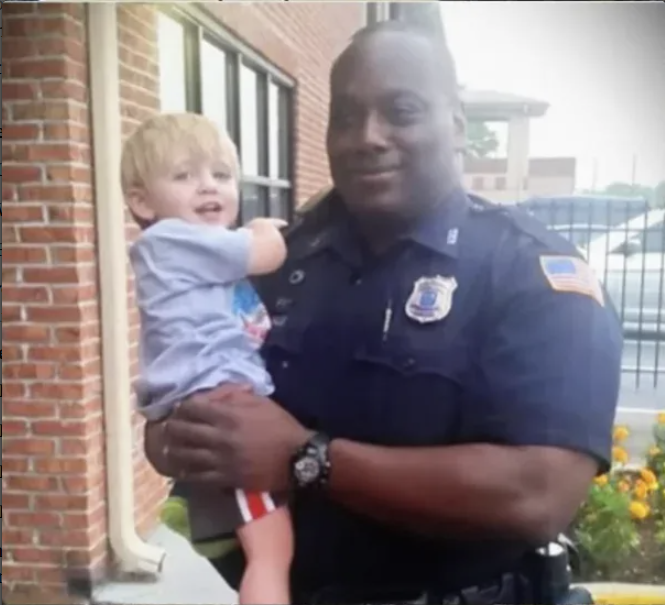
The youngest child, overwhelmed by the tension, had been crying softly. Officer Walker lifted the infant gently into his arms, cradling the tiny body against his uniform. The baby quieted. The other children relaxed. The veteran’s shoulders dropped slightly. In that simple gesture, everything shifted. This wasn’t just about rules anymore—it was about human dignity.
Officer Walker stayed. He didn’t rush off to the next call. He stood beside the family, holding their baby, making sure they felt safe before he left. The crisis passed not because of enforcement, but because of empathy. The family got their room. The veteran steadied. The children saw that sometimes, heroes wear badges and hold babies.
We often think of police work in terms of crime and enforcement. But some of the most important moments happen quietly—in hotel lobbies, on street corners, in the spaces where people feel most vulnerable. Officer Walker understood that protecting people isn’t just about physical safety. It’s about protecting dignity, calming storms, and reminding families that they matter.
That night, the family slept in a room that had almost been denied them. The service dog rested by the bed. The baby slept peacefully. And somewhere in that same city, Officer Walker continued his shift, carrying with him the knowledge that kindness can be as powerful as any law.
Some heroes don’t just uphold rules—they protect hearts, calm storms, and change an entire day with gentleness.