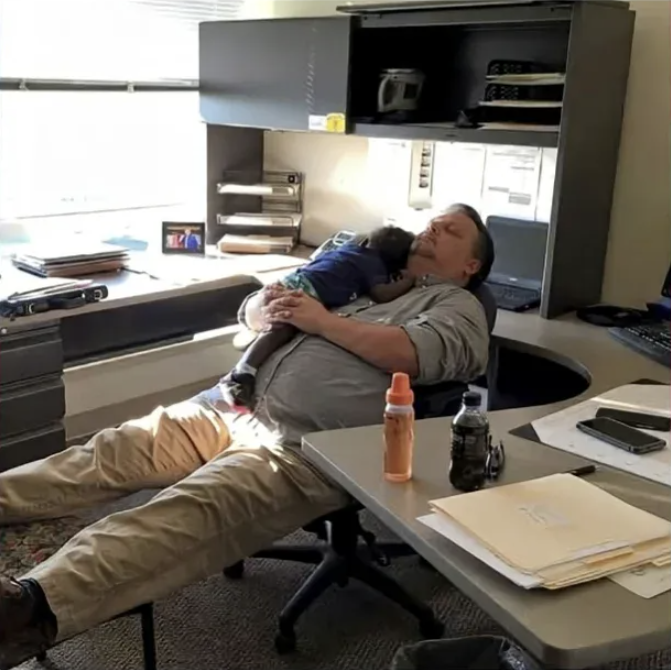
Jason supervises child services cases—thankless work few recognize. He manages paperwork and protocols, coordinates placements, oversees caseworkers who face impossible caseloads and heartbreaking situations. It’s administrative work mostly, the behind-the-scenes coordination that keeps a broken system functioning as well as it can.
But while placing a baby into foster care, he stayed after hours to pick him up, then returned before dawn the next morning. Not because policy required it. Not because anyone would notice or reward extra effort. But because a baby was being moved to unfamiliar surroundings, and Jason understood that transitions matter, that continuity helps, that showing up again might make a frightened child feel slightly less alone.
Away from familiar faces, the baby grew fussy. Didn’t understand why everything had changed. Why the people who’d been caring for him were gone. Why these new arms felt different. Why nothing was familiar or safe or comfortable. He cried with the particular desperation of a baby who needs something no one seems able to provide.
Jason held him close, soothing him through the night. Didn’t pass him off to someone else or leave once the placement was technically complete. Just stayed. Walked the floor. Spoke softly. Did all the things parents do when babies can’t be consoled except through patient, steady presence.
In a world quick to criticize DFACS, people avoid and lie to case workers trying to help children. They make assumptions about motives and competence. They complain about systems without recognizing the individuals working within them who genuinely care. They criticize every decision without understanding the impossible choices caseworkers face—removing children or leaving them at risk, following protocol or responding to human need, maintaining professional boundaries or showing up at dawn because a baby needs familiar arms.
They never see moments like this: a supervisor sacrificing time with his own family, focused only on making one frightened child feel safe and cared for. They don’t see Jason awake all night because a baby needed soothing. Don’t see him returning before dawn because continuity matters. Don’t see the personal cost of choosing to be present for vulnerable children even when it means sacrificing sleep and time with his own family.
Jason’s wife posted this photo—her husband asleep at his desk with a baby on his chest, both of them finally resting after a long night. She wanted people to see what they don’t usually see: the caseworkers who care so deeply they stay up all night. The supervisors who prioritize frightened children over their own comfort. The humans working within an imperfect system, trying their best to help vulnerable kids feel safe.
Child services work is impossibly hard. Caseworkers see trauma constantly. Make decisions that affect lives permanently. Work with limited resources, overwhelming caseloads, and criticism from people who don’t understand the complexity of what they face. They’re blamed when children are left in dangerous homes and blamed when children are removed. They can’t win in the court of public opinion.
But they keep showing up. Keep making impossible decisions. Keep staying up all night with fussy babies in unfamiliar placements. Keep returning before dawn because continuity helps. Keep sacrificing personal time and sleep and moments with their own families because vulnerable children need someone who cares.
That’s what Jason did. Not for recognition or praise or any reward except knowing he’d made one night slightly less frightening for one baby. He stayed after hours, returned before dawn, held a fussy infant through the long dark hours, and fell asleep at his desk because soothing a frightened child mattered more than his own comfort.
People avoid and lie to caseworkers. Criticize them. Assume the worst about their motives. But they never see moments like this—the supervisor asleep at his desk with a baby on his chest, proof that some people in child services sacrifice everything to make vulnerable children feel safe and cared for.