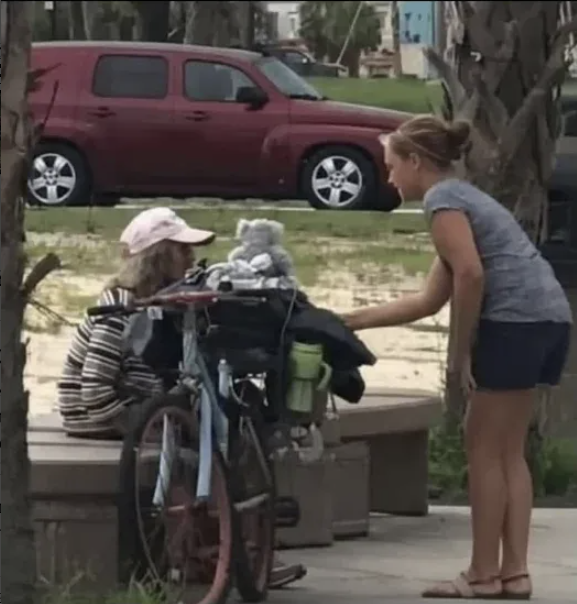
A father kept urging his 12-year-old daughter to save her crumpled five dollars instead of wasting it on candy. The kind of financial lesson parents teach constantly—save your money, don’t waste it on temporary pleasures, think about the future. He meant well, teaching her the value of delayed gratification and smart financial choices.
But when she noticed a homeless woman outside a café, she whispered something that stopped him: “Dad, can I give it to her?”
He said no at first. Not because he was heartless, but because he didn’t realize the woman was actually there. Thought maybe his daughter was speaking hypothetically, testing boundaries, asking about a situation they weren’t actually facing. Parents say no automatically sometimes, especially when caught off guard.
When he finally saw her, regret hit him immediately. There she was—a homeless woman sitting outside the café, visible proof of struggle and need. And his daughter had noticed her while he’d been too focused on the financial lesson to see the human being right in front of them.
He gave a quiet nod.
Not proud. Not instructive. Just a quiet acknowledgment that his daughter had seen something he’d missed. That her instinct to help was better than his instinct to save. That sometimes the most valuable thing money can do is meet immediate need rather than sit unused in a wallet.
The girl walked over and pressed the five dollars into the woman’s hand. No hesitation once she had permission. No second thoughts about the candy she could have bought. Just direct, simple generosity—taking what she had and giving it to someone who needed it more.
Then she smiled and returned to her father. “I’m glad I didn’t buy anything,” she told him, her voice carrying the satisfaction of someone who’d discovered something important. “This helped someone instead.”
A tiny act—a truly big heart.
Five dollars isn’t much. Won’t solve homelessness or change systemic problems or provide long-term support. But it was something. It was a twelve-year-old girl noticing suffering and responding immediately. It was choosing to help over choosing to consume. It was understanding that candy provides temporary pleasure while helping someone provides lasting meaning.
Her father had been teaching her to save money. She taught him something more important: that the value of money isn’t in saving it but in using it wisely. And sometimes the wisest use is giving it away.
That homeless woman received five dollars from a child who noticed her when adults walked past. Received it not with pity or superiority, but with simple recognition that she existed and needed help. Received it from someone young enough to still believe that helping matters, that five dollars can make a difference, that noticing suffering requires response.
The girl will remember this moment. Will remember choosing to give instead of consume. Will remember the feeling—I’m glad I didn’t buy anything, this helped someone instead—that came from prioritizing another person’s need over her own want. Will carry forward the understanding that money matters most when it helps people, not when it sits saved or gets spent on temporary pleasures.
And her father learned too. Learned that sometimes children see more clearly than adults. That financial lessons matter less than compassion lessons. That teaching kids to save is important, but teaching them to notice suffering and respond to it matters more.
Parents spend years teaching children about money—save it, invest it, spend it wisely. But this twelve-year-old girl taught her father something more valuable: that the best use of money is often the most immediate and generous one. That seeing someone in need and having the means to help creates an opportunity that shouldn’t be missed. That candy can wait but human need can’t.
A tiny act—giving five crumpled dollars to a homeless woman outside a café. A truly big heart—understanding at twelve years old that helping someone matters more than buying candy. A lesson learned—sometimes children teach parents about what truly matters.