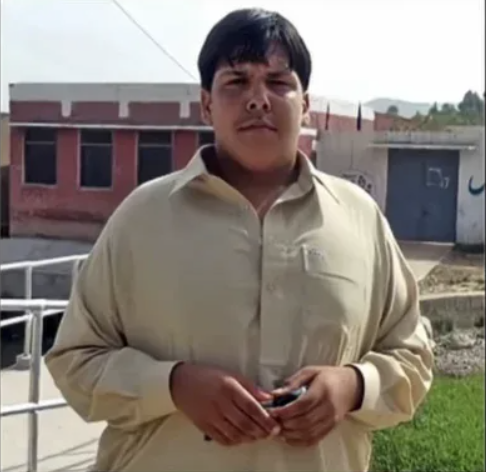
Aitzaz Hasan was 15 years old on the morning everything changed. He was standing outside his school in Pakistan with classmates, probably thinking about homework or weekend plans or all the ordinary concerns of teenage life. Then he saw a man approaching wearing something that made his blood run cold—a vest packed with explosives, heading straight toward the school gates where hundreds of students gathered inside.
Most people would freeze. Most would run. Survival instinct is powerful, and self-preservation is human nature. But Aitzaz didn’t run away. He ran forward.
In the seconds it took to process what was happening, Aitzaz made a calculation that had nothing to do with his own safety. Behind those school walls were his classmates, his friends, children whose mothers had kissed them goodbye that morning expecting to see them again. If the bomber reached the building, the devastation would be unimaginable. Hundreds would die. Hundreds of families would shatter.
So Aitzaz charged. He grabbed the attacker, wrestling him away from the entrance, holding on even as the man struggled to reach his target. Other students fled, screaming, running for cover. Teachers shouted. The world collapsed into chaos and terror. And at the center of it all was a teenage boy who’d decided that some things were worth dying for.
The explosion came seconds later. Aitzaz died instantly, his body absorbing the force that would have killed countless others. The bomber died too, his mission failed by the courage of one teenager who refused to let evil pass. When the smoke cleared and the ringing in everyone’s ears faded, the devastating truth emerged: Aitzaz had saved them all. The building stood intact. The students inside were safe. One boy had traded his life for hundreds.
His father, grief-stricken but impossibly proud, said something that captured the magnitude of what his son had done: He saved hundreds of mothers from crying. Not just lives saved, but families preserved. Not just a school protected, but futures left intact. Every child who went home that day, every parent who hugged them tightly, every sibling who didn’t have to grow up without them—all of it existed because a 15-year-old boy chose courage over fear.
Aitzaz’s story spread across Pakistan and beyond, a reminder that heroism doesn’t wait for adulthood or perfect circumstances. It shows up in teenagers who act on instinct when instinct tells most people to run. It lives in the split-second decision to put others first, even when the cost is absolute. It proves that age has nothing to do with character, and that the truest measure of a person isn’t how long they live but what they’re willing to give.
His school stands today because of him. His classmates grew up, graduated, built families of their own—all of it possible because one boy understood that some sacrifices transcend personal survival. Mothers got to keep their children. Fathers didn’t bury their sons. Siblings stayed whole. All because Aitzaz ran forward when every instinct screamed to run away.
Fifteen years old. A whole life ahead of him. Dreams he’d never fulfill, experiences he’d never have, a future stolen in an instant. But in that instant, he became something more than most people achieve in a lifetime: a guardian, a shield, a light that refused to let darkness win.
They remember him now not with pity but with profound gratitude. His bravery didn’t just save lives—it reminded an entire nation what courage looks like when it matters most. And somewhere, hundreds of mothers who might have spent their lives grieving instead got to watch their children grow up, never forgetting the boy who made that possible.