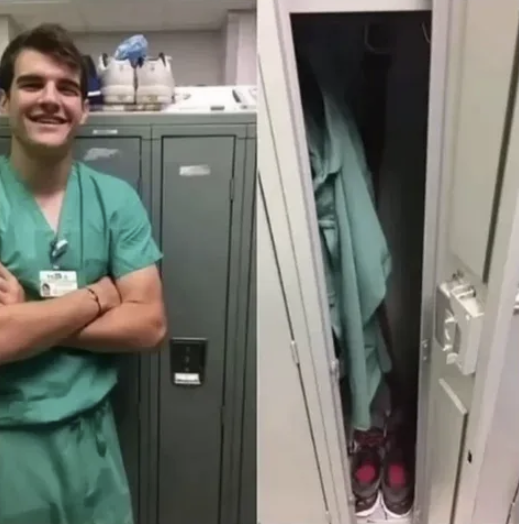
His dad passed away a month ago. Today he started working at the hospital and was offered his locker—the same metal compartment where his father stored scrubs and shoes and the small personal items that make institutional spaces feel slightly less impersonal.
His father was an anesthesiologist who served the community for 23 years before dying from bile duct cancer in May 2017. Twenty-three years of early mornings and late nights. Of easing patients’ fears before surgery. Of monitoring vital signs during procedures. Of being the calm, competent presence that patients trust with their consciousness and safety.
He treated every patient like family and inspired everyone around him. Not just through technical skill—though he had that—but through the way he saw patients as people. Through remembering their names and stories. Through taking time to explain procedures when he could have rushed. Through treating hospital work not as a job but as a calling to care for vulnerable people during frightening moments.
When his son went to scrub out on his first day, the doctors offered him his father’s locker. Not random reassignment. Not just an available space. His father’s locker—the one he’d used for 23 years, the one that still held the imprint of his presence, the one that represented everything he’d been to this hospital and this community.
It feels like a beautiful way to carry on his legacy of helping people.
Not inheriting money or possessions or any tangible wealth. But inheriting a locker. A space. A symbolic connection to the work his father loved and the people he served. Every day when he opens that locker, he’ll remember his father opening it before him. Remember the 23 years of service it represents. Remember that he’s not just following a career path but continuing a legacy of caring for people.
His father treated every patient like family. Now his son wears scrubs from the same locker, walks the same halls, serves the same community. The connection is tangible and symbolic simultaneously—real metal containing real scrubs, but also representing something much larger about service and legacy and the way love for helping people passes from generation to generation.
A month ago, he lost his father. Today, he found a way to keep him close. Not through grief or memory alone, but through continuing the work his father dedicated his life to. Through serving the same community. Through treating patients with the same care and dignity. Through understanding that helping people isn’t just a job but a legacy worth carrying forward.
The locker is just metal and space. But it’s also everything. It’s 23 years of his father’s service. It’s the community his father loved. It’s the patients his father treated like family. It’s the inspiration his father provided to everyone around him. It’s the legacy of helping people that didn’t end with death but continues through a son who chose to follow the same path.
When he closes that locker at the end of his shifts, he won’t just be storing scrubs. He’ll be honoring his father. Continuing his legacy. Proving that the work of helping people doesn’t end when one person dies—it continues through those they inspired, through those who choose to follow, through those who understand that some inheritances aren’t measured in money but in the privilege of continuing work that truly matters.