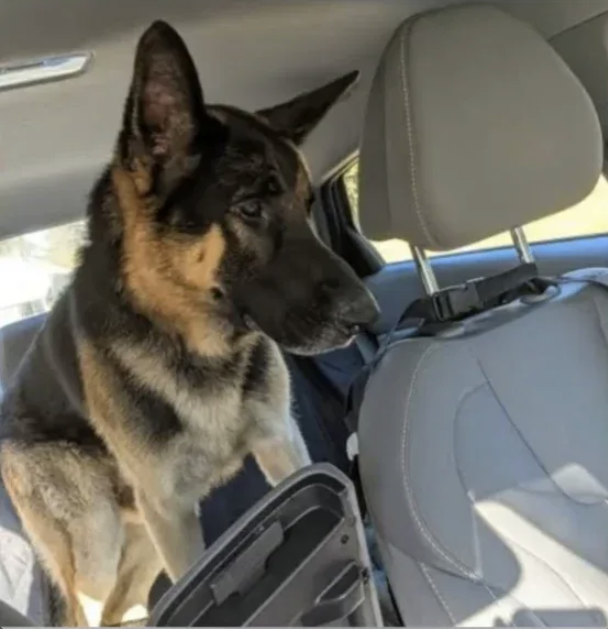
Driving home on I-95, Ana saw a blur of movement on the shoulder—a terrified German Shepherd dodging traffic. Cars speeding past at 70 miles per hour, the dog frantically trying to avoid being hit, desperate and alone on one of the busiest highways in America.
She could have kept driving. Could have assumed someone else would help or that animal control would eventually respond. Could have told herself that stopping on I-95 was too dangerous, that she couldn’t risk her own safety for a dog she didn’t know.
But she didn’t keep driving. She safely pulled over, turned on her hazards, and approached slowly.
The dog was panting, trailing a broken leash—evidence of an escape or abandonment, of something that had gone wrong and left this animal terrified and alone on a highway shoulder. Ana spoke in a low, steady voice, offering her hand. Not rushing. Not making sudden movements. Just being present and calm and patient while the dog decided whether to trust her.
After a tense minute—cars roaring past, the dog trembling with fear and exhaustion—he crept close enough for her to grab the leash remnant. She led the trembling animal into her backseat, away from traffic, away from danger, into a space that wasn’t home but was at least safe.
At the next exit, she called the number on the dog’s tag. And waited. Staying with this frightened animal until his owner could arrive, refusing to just drop him at a shelter or leave him at an exit and hope for the best.
The owner arrived crying. A teenager, tears streaming down their face, repeating “Thank you” through sobs that revealed how terrified they’d been, how certain they’d lost their dog forever, how grateful they were that someone stopped.
Because most people don’t stop. Most people see a dog on a highway shoulder and feel bad but keep driving. Tell themselves someone else will help. Assume animal control will handle it. Convince themselves that stopping is too dangerous or too inconvenient or not their responsibility.
Ana stopped. She risked her safety to save a dog she didn’t know. She spoke calmly to a terrified animal until he trusted her enough to accept help. She stayed with him until his family arrived. She did what most people don’t do—she chose compassion over convenience, action over assumption.
That German Shepherd is home now because Ana saw a blur of movement on the shoulder and decided it mattered. Because she understood that a dog dodging traffic on I-95 would die without intervention. Because she had the courage to pull over on a dangerous highway and the patience to earn a frightened animal’s trust.
The teenager will never forget her. Will tell this story about the day their dog escaped, ended up on I-95, and a stranger named Ana risked her own safety to save him. Will carry gratitude for someone who stopped when most people would have kept driving.
And the German Shepherd—safe in his backseat now, no longer terrified or alone—doesn’t understand what almost happened. Doesn’t know how close he came to being hit by traffic, how lucky he was that Ana saw him, how rare it is for someone to actually stop.
He just knows that when he was most frightened, a calm voice offered help. That when he trusted enough to come close, safety followed. That the blur of movement that could have been his end became his rescue because one person chose to pull over.